


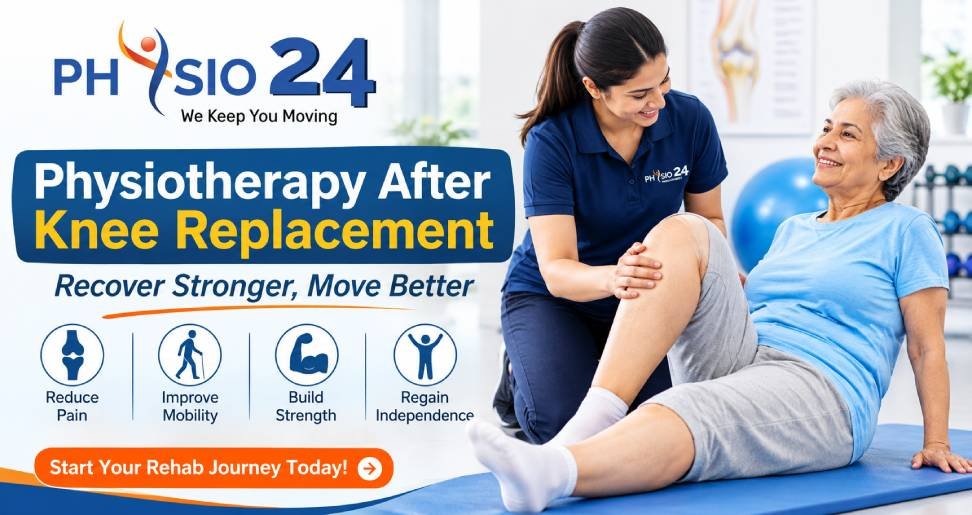
Knee replacement surgery can significantly improve mobility, reduce chronic knee pain, and help people return to their everyday activities. However, surgery is only one part of the recovery process. Proper rehabilitation and consistent physiotherapy after knee replacement play an essential role in restoring strength, flexibility, balance, and joint movement.
After surgery, patients may experience swelling, stiffness, muscle weakness, and difficulty walking or climbing stairs. A structured rehabilitation programme helps address these challenges while supporting a gradual and safe return to normal activities.
Along with conventional physiotherapy, certain complementary approaches, including Chiropractic, Osteopathic Manipulation, and Dry Needling, may be considered in selected cases under professional supervision. Understanding how these treatments work and when they may be appropriate can help patients make informed decisions about their recovery.
1. Why Is Physiotherapy Important After Knee Replacement?
Physiotherapy is one of the most important components of rehabilitation following knee replacement surgery. During the procedure, damaged joint surfaces are replaced with artificial components. Although surgery addresses the structural problem, the surrounding muscles and soft tissues still need time and rehabilitation to regain their function.
A personalised physiotherapy programme focuses on several important recovery goals:
- Restoring knee movement: Gentle exercises help improve bending and straightening of the operated knee.
- Strengthening muscles: Targeted exercises strengthen the quadriceps, hamstrings, and surrounding muscles.
- Improving balance: Balance training helps patients walk confidently and reduces the risk of falls.
- Managing stiffness: Appropriate movement and stretching help improve flexibility.
- Reducing swelling: Elevation, prescribed exercises, and suitable recovery techniques can help manage postoperative swelling.
- Regaining independence: Rehabilitation prepares patients for daily activities such as walking, standing, and climbing stairs.
According to the NHS, complete recovery can take several months or longer, depending on the individual’s health, surgery type, and rehabilitation progress.
2. Understanding the Different Stages of Knee Replacement Recovery
Recovery following knee replacement surgery generally happens gradually. The rehabilitation programme should be adjusted according to the patient’s condition, surgical instructions, and physical progress.
Early Recovery: First 1–2 Weeks
The initial stage focuses on pain management, swelling reduction, circulation, and gentle movement.
A physiotherapist may recommend:
- Ankle pump exercises to encourage circulation.
- Gentle quadriceps contractions.
- Supported knee bending and straightening.
- Short walks using a walker or crutches.
- Safe techniques for getting in and out of bed.
Patients should avoid putting unnecessary pressure on the operated knee and follow the surgeon’s wound-care instructions.
Intermediate Recovery: Weeks 3–6
During this stage, patients generally begin working towards improved mobility and muscle strength.
Common rehabilitation activities include:
- Assisted knee flexion exercises.
- Straight-leg raises when appropriate.
- Supported standing exercises.
- Controlled walking practice.
- Gentle stationary cycling when approved.
- Balance and coordination exercises.
The main objective is to improve functional movement without increasing pain or swelling excessively.
Advanced Recovery: Weeks 7–12 and Beyond
Once the patient demonstrates sufficient healing and strength, rehabilitation can gradually become more challenging.
Exercises may include:
- Progressive resistance training.
- Step-up exercises.
- Improved walking endurance.
- Functional movement training.
- Balance exercises.
- Gradual return to low-impact activities.
Not everyone follows the same recovery timeline. Exercise intensity should always depend on individual progress and professional assessment.
3. How Chiropractic Can Support Musculoskeletal Rehabilitation
Chiropractic is a healthcare approach that focuses on the assessment and management of musculoskeletal conditions, including problems involving muscles, joints, and movement.
Following knee replacement surgery, patients sometimes experience changes in walking patterns because they have been avoiding pressure on the affected knee. These changes may contribute to discomfort in other areas, including the hips, lower back, and surrounding muscles.
A qualified chiropractor may assess these movement-related concerns and recommend appropriate supportive care.
Potential areas of focus include:
- Assessing posture and walking patterns.
- Identifying movement restrictions in surrounding joints.
- Addressing muscular tension.
- Supporting comfortable movement through appropriate rehabilitation techniques.
However, chiropractic treatment should be adapted carefully after joint replacement. Forceful manipulation of the operated knee or techniques that place excessive stress on the prosthetic joint should be avoided.
The surgical team should approve any manual treatment before it is introduced.
4. Understanding Osteopathic Manipulation After Knee Replacement
Osteopathic Manipulation is a hands-on approach that focuses on improving musculoskeletal function, mobility, and the relationship between different parts of the body.
After knee replacement, some patients develop compensatory movement patterns. For example, they may place more weight on the opposite leg or change their posture to avoid discomfort.
Over time, these adjustments can contribute to muscular tightness and discomfort in other areas.
Osteopathic Manipulation may be considered as a supportive approach to address selected musculoskeletal concerns.
Depending on the patient’s recovery stage, a qualified practitioner may use gentle techniques to:
- Improve comfortable movement in surrounding joints.
- Address muscle tension.
- Support hip and ankle mobility.
- Improve overall movement coordination.
- Encourage better posture and walking mechanics.
It is important to understand that Osteopathic Manipulation does not replace the artificial knee joint or independently restore its function. It should complement an appropriate rehabilitation programme rather than replace prescribed exercises.
Direct or forceful manipulation around the operated knee must be avoided unless specifically assessed and approved by the treating surgical team.
5. Can Dry Needling Help During Knee Replacement Rehabilitation?
Dry Needling is a treatment technique in which a trained healthcare professional inserts thin, sterile needles into selected muscular trigger points to address certain musculoskeletal symptoms.
Some patients experience muscle tightness, discomfort, and trigger-point sensitivity during their recovery. Dry Needling may be considered in selected cases to help manage these symptoms.
Potential treatment goals include:
- Addressing muscular trigger points.
- Managing muscle-related discomfort.
- Reducing muscular tension.
- Supporting comfortable movement.
- Complementing an individualised physiotherapy programme.
Important safety consideration: Dry Needling is not an automatic treatment for patients who have undergone knee replacement surgery.
It should generally be avoided during the first six weeks following surgery according to recent clinical consensus guidance. Tissues surrounding the surgical site may also require protection for longer, potentially up to 12 weeks. The treating surgeon must provide clearance before this technique is considered.
Practitioners should also carefully assess infection risks, wound healing, bleeding risks, and medications such as anticoagulants before treatment.
6. Essential Physiotherapy Exercises for Better Knee Mobility
Regular exercise is necessary for rebuilding strength and improving joint movement after surgery. However, patients should only perform exercises recommended by their physiotherapist.
Some commonly prescribed exercises include:
Ankle Pumps: Move the feet up and down while lying or sitting. This helps encourage blood circulation.
Quadriceps Sets: Tighten the thigh muscles while keeping the operated leg straight. Hold briefly before relaxing.
Heel Slides: Gently slide the heel towards the body to bend the knee, within the comfortable range recommended by the therapist.
Straight Leg Raises: Lift the operated leg while keeping the knee straight, provided adequate muscle control has returned.
Supported Walking: Walk short distances using the recommended walking aid to gradually improve confidence and endurance.
These exercises should be performed according to professional instructions rather than a fixed online routine.
7. Important Precautions for a Safe Recovery
Successful rehabilitation requires patience and consistency. Patients should avoid rushing through exercises or comparing their progress with someone else’s recovery.
Consider these precautions:
- Follow the orthopaedic surgeon’s instructions.
- Attend scheduled physiotherapy appointments.
- Avoid high-impact activities until medically cleared.
- Do not kneel or twist the operated knee without appropriate medical guidance.
- Keep the surgical wound clean and follow dressing instructions.
- Avoid excessive exercise that increases pain or swelling.
- Maintain a balanced diet and adequate hydration.
- Use walking aids until it is safe to walk independently.
Seek immediate medical assessment if you experience fever, increasing wound redness, unusual discharge, severe or worsening pain, or significant calf swelling. Sudden breathlessness or chest pain requires emergency medical attention.
8. When Should You Consult a Physiotherapist?
Ideally, rehabilitation begins soon after surgery, often on the day of surgery or within 24 hours when medically appropriate.
You should consult a qualified physiotherapist if you experience persistent stiffness, difficulty bending your knee, reduced walking ability, muscle weakness, or difficulty performing everyday activities.
A professional assessment helps determine your current mobility, muscle strength, balance, and functional limitations. Based on these findings, your physiotherapist can develop an appropriate treatment plan and monitor your progress.
Conclusion
Recovering from knee replacement surgery requires more than simply allowing the surgical wound to heal. A well-planned rehabilitation programme helps restore strength, improve flexibility, develop better balance, and rebuild confidence in everyday movement.
Physiotherapy remains the foundation of recovery, while Chiropractic, Osteopathic Manipulation, and Dry Needling may provide additional support in carefully selected cases when medically appropriate.
The most important factors are early professional guidance, consistent exercises, proper recovery precautions, and regular monitoring.
With the right rehabilitation approach and guidance from experienced healthcare professionals, patients can gradually improve their mobility and work towards a more active and independent lifestyle.


Leave a Reply
You must belogged in to post a comment.