Make an appointment Make an appointment

Guide

Stroke Rehabilitation Exercises and Physiotherapy
Stroke Rehabilitation Exercises and Physiotherapy: A Guide to Recovery and Improved Mobility 972 516 developer

Stroke Rehabilitation Exercises and Physiotherapy: A Guide to Recovery and Improved Mobility

A stroke can significantly affect a person’s movement, balance, coordination, speech, and ability to perform everyday activities. Recovery may take weeks, months, or even years, depending on the severity of the stroke and the individual’s overall health. With appropriate medical care, consistent rehabilitation, and professional guidance, many stroke survivors can improve their functional abilities and regain greater independence.

Stroke rehabilitation exercises and physiotherapy play an important role in helping individuals rebuild strength, improve mobility, and relearn essential movements. A personalized rehabilitation programme can address physical limitations while supporting confidence and quality of life.

For individuals seeking professional rehabilitation support, Physio 24 offers physiotherapy services designed to address different movement-related concerns and help patients work towards their functional goals.

What Is Stroke Rehabilitation?

Stroke rehabilitation is a structured process that helps individuals recover or adapt to physical and cognitive difficulties caused by a stroke. A stroke occurs when blood flow to part of the brain is interrupted or when bleeding damages brain tissue. The resulting effects depend on which part of the brain is affected.

Some stroke survivors experience weakness or paralysis on one side of the body, while others have difficulty walking, maintaining balance, or coordinating their movements. Everyday tasks such as standing up, dressing, bathing, and climbing stairs may also become challenging.

Rehabilitation aims to improve the abilities that have been affected and help individuals participate more comfortably in daily life. Treatment may involve physiotherapy, occupational therapy, speech and language therapy, and other specialist interventions depending on individual needs.

Why Is Physiotherapy Important After a Stroke?

Physiotherapy is an essential component of physical recovery following a stroke. A physiotherapist assesses muscle strength, joint movement, balance, posture, coordination, and walking ability before developing an appropriate treatment plan.

Regular, supervised rehabilitation can help patients practise functional movements and improve their ability to complete daily activities.

The main benefits of stroke physiotherapy include:

  • Improved muscle strength: Targeted exercises help address weakness in affected limbs.
  • Better balance and coordination: Specific activities help patients practise maintaining stability while sitting, standing, and walking.
  • Improved mobility: Walking and movement exercises support greater independence.
  • Reduced risk of complications: Appropriate positioning and movement can help reduce the risk of stiffness, contractures, and other problems associated with immobility.
  • Greater functional independence: Practising everyday movements can make routine activities easier to manage.

The rehabilitation plan should reflect the patient’s medical condition, physical abilities, and recovery goals.

Effective Stroke Rehabilitation Exercises

Stroke rehabilitation exercises should be selected according to the individual’s abilities and medical advice. Some exercises may require assistance from a trained physiotherapist or caregiver. Patients should not attempt challenging movements independently if they have significant weakness, dizziness, or balance difficulties.

1. Range-of-Motion Exercises

Range-of-motion exercises help maintain flexibility and prevent stiffness in joints affected by reduced movement.

These exercises may involve gently moving the shoulders, elbows, wrists, fingers, hips, knees, and ankles. If a patient cannot move a limb independently, a trained caregiver or physiotherapist may assist with the movement.

Movements should be slow and comfortable. Never force a joint beyond its available range, particularly when shoulder weakness or pain is present.

2. Strengthening Exercises

Muscle weakness is common after a stroke. Strengthening exercises help patients develop the strength required for standing, walking, and everyday tasks.

Depending on the patient’s abilities, exercises may include:

  • Gently squeezing a soft ball.
  • Straightening and bending the knee while seated.
  • Performing supported sit-to-stand movements.
  • Lifting the heel while seated.
  • Practising controlled arm movements.

A physiotherapist can adjust repetitions, resistance, and difficulty as the patient progresses.

3. Balance Training

Balance difficulties can increase the risk of falls after a stroke. Balance training focuses on improving postural control and stability.

Exercises may begin with sitting upright and shifting body weight gently from one side to another. Patients who can stand safely may progress to supported standing, controlled weight shifting, and reaching for nearby objects.

These activities should be performed with appropriate support and supervision, particularly during the early stages of recovery.

4. Walking and Gait Training

Walking may become difficult when a stroke affects leg strength, coordination, or balance. Gait training helps patients practise the movements involved in walking.

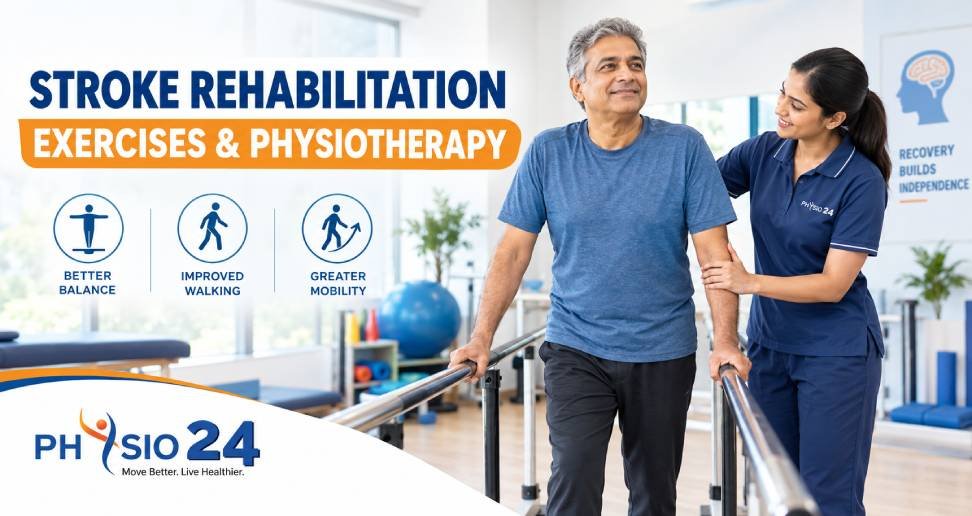
A rehabilitation programme may include supported standing, stepping in place, practising steps between parallel bars, and walking short distances with an appropriate walking aid.

The physiotherapist may also assess walking posture, step length, foot placement, and weight distribution. Progress should be gradual, with attention to safety and fatigue.

5. Hand and Finger Exercises

Stroke-related weakness can affect grip strength and fine motor skills, making activities such as buttoning clothes, holding a cup, or using cutlery difficult.

Hand rehabilitation may include opening and closing the fingers, touching the thumb to each fingertip, gently squeezing a soft object, and practising picking up lightweight objects.

The exercises should focus on controlled movement rather than speed. Repeated, purposeful practice can help patients work towards improved hand function.

6. Sit-to-Stand Exercises

Standing up from a chair is an important everyday movement that requires strength, balance, and coordination.

When medically appropriate, patients can practise rising from a stable chair with assistance from a physiotherapist. The therapist may guide foot placement, posture, and weight distribution to encourage safer movement.

Patients should not practise this exercise alone if they are at risk of falling.

How Physiotherapists Develop a Stroke Recovery Plan

Every stroke survivor has different rehabilitation needs. A physiotherapist usually begins with an assessment of movement, strength, balance, joint flexibility, and functional limitations.

Based on the findings, the therapist establishes realistic goals and creates a programme that progresses as the patient’s abilities improve.

For example, an early goal may involve maintaining a stable sitting position. Later goals may include standing with assistance, transferring between a bed and chair, or walking with a mobility aid.

Consistency is important, but recovery should not be rushed. Rest periods help manage fatigue, while regular reassessment allows the therapist to modify the exercises according to progress.

Family members and caregivers may also learn safe positioning, transfer techniques, and appropriate ways to support prescribed exercises.

Can Chiropractic, Osteopathic Manipulation, and Dry Needling Help After a Stroke?

Stroke survivors sometimes experience secondary musculoskeletal problems, including muscle tightness, joint discomfort, and altered posture. However, these concerns require careful assessment because neurological impairments can affect treatment safety.

Chiropractic: Chiropractic care commonly focuses on musculoskeletal conditions. High-velocity spinal manipulation should not be considered a routine stroke rehabilitation treatment. Any proposed chiropractic intervention should be discussed with the patient’s treating medical team, particularly when cardiovascular or neurological concerns are present.

Osteopathic Manipulation: Osteopathic manipulation includes hands-on techniques intended to address musculoskeletal restrictions. Its role in stroke recovery is limited by the available evidence and the patient’s individual condition. Gentle techniques, if considered, should only be used following appropriate assessment and medical clearance.

Dry Needling: Dry needling is used by trained practitioners to address certain muscular pain and tension conditions. It does not reverse brain damage caused by a stroke and is not a primary treatment for restoring neurological function. Bleeding risk, medications such as anticoagulants, altered sensation, and other medical factors must be considered before treatment.

Physiotherapy: Physiotherapy remains a central part of physical stroke rehabilitation. It focuses on functional movement, strength, balance, mobility, and practising activities relevant to everyday life.

These approaches are not interchangeable. The patient’s stroke team and qualified rehabilitation professionals should determine which interventions, if any, are appropriate.

Tips for Supporting Recovery at Home

A safe home environment and a consistent routine can support rehabilitation between professional sessions.

Consider the following steps:

  • Follow the exercise plan prescribed by the physiotherapist.
  • Practise only movements that have been assessed as safe.
  • Remove loose rugs and obstacles from walking areas.
  • Install grab bars or other recommended support equipment.
  • Wear secure, non-slip footwear.
  • Allow sufficient time for rest and recovery.
  • Attend follow-up appointments and report any new symptoms.

Caregivers should avoid pulling the affected arm when helping a patient stand or move, as this may cause shoulder injury.

Seek immediate emergency medical attention if new or sudden stroke symptoms develop, including facial drooping, arm weakness, speech difficulty, sudden vision problems, or loss of balance. Do not assume that these symptoms are part of the existing recovery process.

How Physio 24 Can Support Rehabilitation Goals

Recovering after a stroke can be challenging, but a structured rehabilitation programme can help patients work towards greater independence and improved movement.

Physio 24 provides physiotherapy services for individuals experiencing different mobility and musculoskeletal concerns. Depending on an individual’s needs and clinical assessment, relevant services may include Neurological Physiotherapy, Manual Therapy, and Orthopedic Physiotherapy.

Patients and caregivers can explore the available Physiotherapy Services to learn more about rehabilitation support and discuss suitable treatment options with a qualified professional.

The appropriate programme will depend on the patient’s stroke history, current abilities, medical clearance, and recovery goals.

Conclusion

Stroke rehabilitation exercises and physiotherapy can help survivors improve strength, balance, coordination, and functional mobility. Exercises involving range of motion, strengthening, balance, walking, and hand coordination may form part of an individualized rehabilitation programme.

Recovery is different for everyone, and progress may occur gradually. Professional assessment, regular practice, caregiver support, and a safe home environment can all contribute to the rehabilitation process.

Working with a qualified physiotherapist helps ensure that exercises are appropriate, achievable, and adapted to the patient’s changing needs. With consistent, carefully supervised rehabilitation, stroke survivors can work towards safer movement, greater independence, and an improved quality of life.
Sports Injury Rehabilitation
Sports Injury Rehabilitation: A Complete Guide to Recovering Safely and Returning to Sport 972 514 developer

Sports Injury Rehabilitation: A Complete Guide to Recovering Safely and Returning to Sport

Sports and exercise are excellent ways to maintain fitness, strength and overall wellbeing. However, regular physical activity can sometimes lead to injuries such as muscle strains, ligament injuries, tendon problems, sprains, joint pain and overuse injuries. When an injury occurs, simply resting until the pain disappears may not always be enough. A structured sports injury rehabilitation programme can help restore movement, strength, flexibility and confidence so that you can gradually return to your normal activities.

Professional rehabilitation may involve assessment, targeted exercises, manual techniques and activity modification. Physiotherapy is commonly used for sports injuries and can help improve movement, strength and function following injury.

What Is Sports Injury Rehabilitation?

Sports injury rehabilitation is a structured process designed to help an injured person recover physical function and safely return to exercise or sport.

Depending on the injury, rehabilitation may focus on:

  • Reducing pain and swelling
  • Restoring joint mobility
  • Improving muscle strength
  • Developing flexibility
  • Correcting movement or muscle imbalances
  • Improving balance and coordination
  • Rebuilding sporting movements
  • Reducing the risk of future injury

The rehabilitation process should be personalised because every injury and every person is different. The severity of the injury, previous injuries, fitness level and the demands of the individual’s sport can all influence recovery.

Common Sports Injuries That May Require Rehabilitation

Sports injuries can affect almost any part of the body. Some common examples include:

1. Sprains

A sprain occurs when a ligament is stretched or damaged. Ankle sprains are particularly common among runners, footballers, basketball players and other athletes.

2. Muscle Strains

A muscle or tendon can become overstretched or damaged during sports activity. Hamstring, calf and groin strains are common examples.

3. Ligament Injuries

Ligaments provide stability to joints. Injuries involving structures such as the ACL, MCL or ankle ligaments may require a carefully planned rehabilitation programme.

4. Tendon Injuries

Repeated loading can contribute to tendon problems, particularly around areas such as the Achilles tendon, knee, elbow and shoulder.

5. Overuse Injuries

Not every sports injury happens suddenly. Repetitive movements, excessive training loads, inadequate recovery or changes in activity can contribute to persistent pain and tissue problems.

A proper assessment can help determine the appropriate rehabilitation approach rather than relying on guesswork.

The Role of Physiotherapy in Sports Injury Rehabilitation

Physiotherapy is an important component of sports injury rehabilitation. A physiotherapist can assess movement, strength, flexibility, balance and functional ability before developing an appropriate treatment plan.

Treatment may include exercise therapy, manual therapy, education and advice. NHS guidance also highlights strengthening and movement exercises as common components of physiotherapy.

An effective programme may progress through several stages:

Early recovery: The initial focus may be protecting the injured area, controlling symptoms and maintaining safe movement.

Mobility: Gentle exercises may be introduced to restore appropriate joint and soft-tissue movement.

Strength: Progressive resistance exercises can help rebuild the strength required for daily activities and sport.

Functional training: Exercises can become more specific to the movements required by the individual’s sport.

Return to sport: Running, jumping, changing direction, lifting or other sporting activities may be gradually reintroduced according to recovery and professional assessment.

Returning to sport too quickly can increase the risk of further injury. Public-health guidance recommends being properly rehabilitated before returning to sporting activity.

How Chiropractic Can Support Musculoskeletal Recovery

Chiropractic care focuses on the assessment and management of musculoskeletal problems and may involve hands-on techniques designed to improve movement and reduce discomfort.

For selected patients, chiropractic approaches may form part of a broader rehabilitation programme. The exact treatment should depend on the individual’s condition, assessment findings and clinical needs.

Importantly, hands-on treatment should generally complement active rehabilitation rather than replace appropriate exercises. Exercise-based rehabilitation is particularly important for restoring strength and function.

Osteopathic Manipulation for Movement and Function

Osteopathic Manipulation is another hands-on approach that may be considered for certain musculoskeletal problems. It can involve techniques such as mobilisation, stretching and manipulation to address movement restrictions and muscular or joint-related problems.

An appropriate assessment is important before using manipulation because not every technique is suitable for every injury. Treatment should be tailored to the individual’s symptoms, physical findings and rehabilitation goals.

For athletes, the wider objective should be to restore useful movement and function rather than simply providing short-term symptom relief.

Dry Needling in Sports Rehabilitation

Dry Needling is a technique involving the insertion of fine needles into selected tissues. It may be used as part of a broader rehabilitation programme for certain musculoskeletal conditions.

Some NHS treatment information lists dry needling among possible treatment options for specific tendon problems, while also emphasising progressive rehabilitation and exercise.

Dry needling should therefore be viewed as one possible component of treatment rather than a standalone solution. A qualified practitioner should determine whether it is appropriate for the individual’s condition.

Why Exercise Is Essential

One of the most important parts of rehabilitation is progressive exercise.

An injured athlete may initially need gentle movements, but the programme can gradually become more challenging. Depending on the injury and sport, this may include:

  • Mobility exercises
  • Resistance training
  • Balance exercises
  • Core strengthening
  • Stability exercises
  • Running drills
  • Agility exercises
  • Jumping and landing exercises
  • Sport-specific movements

Exercise helps the body prepare for the physical demands it will face after returning to sport. NHS physiotherapy guidance describes individual exercise programmes and progressive functional rehabilitation as important components of musculoskeletal care.

Returning to Sport Safely

Returning to sport should be a gradual process rather than an immediate jump back into full training.

Before returning to competitive activity, an athlete may need to demonstrate appropriate movement, strength, balance and sport-specific function. The progression can move from basic exercises to more demanding activities and eventually full sporting movements.

The timeline varies considerably depending on the injury. For example, a mild sprain may recover relatively quickly, while a significant ligament, tendon or muscle injury may require a much longer rehabilitation programme.

If pain, swelling, weakness or restricted movement continues, professional assessment may be appropriate rather than repeatedly training through the symptoms.

Preventing Future Sports Injuries

Rehabilitation should not only focus on recovering from the current injury. It can also provide an opportunity to identify factors that may contribute to future problems.

Useful injury-prevention habits include:

  • Warming up before exercise
  • Increasing training intensity gradually
  • Using appropriate equipment and footwear
  • Maintaining strength and flexibility
  • Allowing adequate recovery between demanding sessions
  • Using correct sporting technique
  • Avoiding sudden increases in training volume
  • Addressing previous injuries properly

Previous injury is recognised as an important risk factor for future soft-tissue injury, making appropriate rehabilitation particularly important.

Get Professional Support for Sports Injury Rehabilitation

Whether you are a professional athlete, recreational sports enthusiast, gym-goer or someone who enjoys occasional exercise, an untreated injury can interfere with your performance and everyday life.

At Physio 24, sports injury rehabilitation can incorporate Physiotherapy, Chiropractic, Osteopathic Manipulation and Dry Needling, depending on the individual’s assessment and treatment requirements.

A personalised rehabilitation approach can help address pain and movement limitations while progressively rebuilding strength and function. The goal is not simply to feel better temporarily but to help you regain the physical capacity required for your normal activities and sporting goals.

If you have suffered a sports injury, getting an appropriate assessment can help you understand the problem and determine the next steps towards recovery. Do not ignore persistent pain or continue high-intensity activity when your body is not ready. A structured rehabilitation programme can provide a safer pathway back to movement, exercise and sport.

Sports Physiotherapist Kolkata
Sports Physiotherapist Kolkata: Expert Care for Sports Injuries and Faster Recovery 972 515 developer

Sports Physiotherapist Kolkata: Expert Care for Sports Injuries and Faster Recovery

Sports and physical activities are excellent for fitness, strength, and overall wellbeing, but they can also place considerable stress on muscles, joints, ligaments, and bones. From ankle sprains and muscle strains to ACL injuries and shoulder problems, sports injuries can affect both professional athletes and people who exercise recreationally.

If you are searching for a sports physiotherapist in Kolkata, getting the right assessment and rehabilitation plan can make an important difference to your recovery. Sports physiotherapy focuses not only on reducing pain but also on restoring movement, rebuilding strength, improving physical function, and helping you return to your preferred activities safely.

For people looking for professional rehabilitation support in Kolkata, Physio 24 provides physiotherapy and sports-injury rehabilitation services designed around individual needs.

What Does a Sports Physiotherapist Do?

A sports physiotherapist specialises in the assessment, treatment, rehabilitation, and prevention of injuries associated with sports and physical activity. Treatment can be useful for athletes as well as gym-goers, runners, cyclists, dancers, and anyone who regularly participates in exercise.

A sports physiotherapist may assess:

  • Joint mobility and flexibility
  • Muscle strength and endurance
  • Balance and coordination
  • Movement patterns
  • Posture and biomechanics
  • Previous injuries
  • Sports-specific physical demands

Following an assessment, the physiotherapist can develop a rehabilitation programme based on the individual’s condition, activity level, recovery goals, and functional requirements.

Common Sports Injuries Treated With Physiotherapy

Sports injuries can occur because of sudden trauma, repetitive movements, inadequate recovery, poor technique, or excessive training loads.

Some common injuries include:

1. ACL and Knee Injuries

Knee injuries are particularly common in sports involving running, jumping, pivoting, or sudden changes in direction. ACL injuries can significantly affect an athlete’s ability to participate in sport.

A structured ACL Reconstruction Rehabilitation programme can help progressively restore mobility, strength, stability, balance, and functional performance following surgery.

2. Muscle Strains

Hamstring, calf, quadriceps, and groin strains can occur when muscles are overloaded or stretched beyond their capacity. Returning to sport too quickly can increase the risk of recurrence.

Physiotherapy can help gradually restore flexibility, strength, and exercise tolerance before an athlete resumes full activity.

3. Ankle Sprains

Ankle sprains are frequent among runners, footballers, basketball players, and other athletes. Even when pain decreases quickly, weakness and reduced balance may remain.

Rehabilitation can include mobility exercises, strengthening, balance training, and progressive sport-specific movements.

4. Shoulder Injuries

Sports involving repetitive overhead movements, such as swimming, cricket, tennis, and certain gym exercises, can contribute to shoulder problems.

A physiotherapist can assess shoulder movement and strength before developing an appropriate rehabilitation programme.

Why Sports Physiotherapy Is Important for Athletes

Simply reducing pain does not necessarily mean an injury has completely recovered. An athlete may feel better while still having reduced strength, mobility, coordination, or confidence.

Sports physiotherapy takes a more comprehensive approach by addressing the underlying physical limitations and progressively preparing the individual for normal activity.

A rehabilitation programme may include:

  • Mobility exercises
  • Progressive strengthening
  • Balance and coordination training
  • Functional exercises
  • Manual therapy
  • Movement retraining
  • Sport-specific conditioning
  • Injury-prevention strategies

This gradual approach can help athletes build physical capacity rather than rushing back into demanding activities.

Treatment Approaches at Physio 24

One of the advantages of professional physiotherapy is that treatment can be adapted according to the individual’s assessment rather than relying on a single technique.

At Physio 24, a range of physiotherapy and rehabilitation services are available. Its listed services include Manual Therapy, Dry Needling with Electro Therapy, Therapeutic Tapping, Laser Therapy, and ACL Reconstruction Rehabilitation.

Chiropractic

Chiropractic may involve hands-on approaches directed toward musculoskeletal movement and function. When appropriate, it can be considered as part of a broader approach to managing certain musculoskeletal problems.

Treatment should always be selected following an appropriate assessment rather than assuming that the same technique is suitable for every athlete.

Osteopathic Manipulation

Osteopathic Manipulation uses hands-on techniques to address movement and musculoskeletal function. Physio 24’s clinical profile includes fellowship training in Osteopathic Manipulation Techniques.

For sports-related conditions, the suitability of manipulation depends on the individual’s symptoms, injury, medical history, and clinical assessment.

Dry Needling

Dry Needling uses fine needles to target selected muscles or soft tissues and may be considered when muscular tension or myofascial pain is contributing to a person’s symptoms.

At Physio 24, Dry Needling with Electro Therapy is listed among its services.

Physiotherapy

Physiotherapy remains the foundation of sports rehabilitation for many injuries. It can combine exercise therapy, movement retraining, education, manual techniques, and other clinically appropriate interventions.

The objective is to help the individual regain functional capacity and progressively return to their desired activities.

When Should You See a Sports Physiotherapist in Kolkata?

Consider consulting a sports physiotherapist if you experience:

  • Persistent pain during or after exercise
  • Swelling following an injury
  • Reduced joint movement
  • Muscle weakness
  • Repeated sports injuries
  • Difficulty running, jumping, lifting, or changing direction
  • Pain that affects your training
  • Loss of confidence following an injury
  • Difficulty returning to sport after surgery

Early professional assessment can help identify movement limitations and establish an appropriate rehabilitation strategy.

Sports Injury Prevention Matters Too

Sports physiotherapy is not only about treating injuries after they happen. Prevention can also be an important part of an athlete’s long-term performance.

A physiotherapist may help identify strength or mobility limitations and provide guidance regarding:

  • Warm-up routines
  • Strength training
  • Flexibility and mobility
  • Training progression
  • Recovery
  • Movement technique
  • Workload management
  • Sport-specific conditioning

These strategies can help athletes better prepare their bodies for the physical demands of their chosen activities.

Why Consider Physio 24 for Sports Physiotherapy in Kolkata?

Choosing the right physiotherapy clinic is important when you want structured rehabilitation rather than temporary symptom management.

Physio 24 is based on VIP Road, Kolkata, and its website identifies Dr. Vikash Kumar Tarway as an Orthopedic, Sports Injury, and Neurological Rehabilitation Specialist. The clinic also highlights physiotherapy, chiropractic care, advanced electrotherapy, and clinical as well as home-visit options.

Its combination of rehabilitation services allows treatment to be adapted according to the individual’s injury, recovery stage, and functional goals.

Get Professional Sports Injury Rehabilitation

Whether you are a professional athlete, a weekend runner, a gym enthusiast, or simply someone who enjoys staying active, an injury should not be ignored. Continuing demanding activities despite persistent pain can sometimes make recovery more difficult.

A qualified sports physiotherapist in Kolkata can assess your condition, identify functional limitations, and develop a progressive plan to help you return to movement and activity.

With services such as Physiotherapy, Manual Therapy, Dry Needling, Chiropractic, Osteopathic Manipulation, Therapeutic Tapping, Laser Therapy, and ACL Reconstruction Rehabilitation, Physio 24 offers a broad approach to musculoskeletal and sports-injury care.

If you are looking for personalised sports injury rehabilitation in Kolkata, Physio 24 can be considered for professional assessment and physiotherapy support focused on recovery, movement, and a safe return to activity.

Physiotherapist in Kolkata
5 Factors to Consider When Choosing a Physiotherapy Clinic in Kolkata 1024 683 developer

5 Factors to Consider When Choosing a Physiotherapy Clinic in Kolkata

Finding the right physiotherapy clinic can make an important difference to your recovery, mobility, and overall quality of life. Whether you are dealing with an injury, persistent pain, reduced movement, or recovering after surgery, the clinic you choose should match your individual needs. With many options available across Kolkata, knowing what to look for can help you make a confident and informed decision.

1. Check the Experience and Expertise of the Physiotherapists

The experience and qualifications of the physiotherapy team should be one of your first considerations. Physiotherapy covers a wide range of conditions, so it is useful to choose a clinic with professionals who understand your particular concern.

For example, someone recovering from a sports injury may require a different rehabilitation approach from an older adult experiencing mobility difficulties. Similarly, patients recovering from neurological conditions may need specialised rehabilitation.

Before choosing a clinic, consider whether its physiotherapists have experience working with conditions similar to yours. A good professional should also take time to understand your symptoms, medical history, daily activities, and recovery goals before recommending a treatment approach.

2. Look for a Personalised Treatment Approach

Every patient responds differently to treatment. A physiotherapy programme should therefore be based on an individual’s condition rather than following exactly the same approach for everyone.

A reliable clinic should begin with an appropriate assessment and use the findings to develop a treatment plan suited to your needs. Your programme may involve therapeutic exercises, mobility training, manual techniques, rehabilitation exercises, or other suitable approaches depending on your condition.

When searching for a Physiotherapist in Kolkata, look for a clinic that focuses on personalised care and regularly evaluates your progress. This can help ensure that your treatment plan develops as your strength, mobility, and comfort improve.

3. Consider the Range of Services Available

Another important factor is whether the clinic can support different rehabilitation requirements under one roof. A broader range of services can be particularly useful if your needs change during recovery or if you require specialised care.

For patients dealing with neurological conditions, access to appropriate Neurology in Kolkata services and rehabilitation expertise can be an important consideration. Likewise, individuals managing bone, joint, muscle, or movement-related concerns may benefit from access to Orthopaedic Services in Kolkata alongside physiotherapy.

Before making your decision, check whether the clinic offers services relevant to your condition. This can make it easier to receive appropriate guidance throughout different stages of rehabilitation.

Ask About the Assessment Process

Do not hesitate to ask how the clinic evaluates new patients. A proper assessment should help the physiotherapist understand your limitations and identify areas that need attention.

You can also ask how progress will be measured and whether your treatment plan will be adjusted when necessary. Clear communication at the beginning can make the treatment experience more comfortable and organised.

4. Pay Attention to the Clinic Environment and Facilities

The clinic environment can also influence your overall treatment experience. Look for a facility that is clean, organised, comfortable, and equipped to support the type of rehabilitation you require.

Depending on your condition, you may need space for movement-based exercises, rehabilitation equipment, or other specialised facilities. Accessibility is also worth considering, particularly for patients who have difficulty walking or moving independently.

A professional environment can help you feel more comfortable during regular appointments and encourage consistency throughout your rehabilitation programme.

5. Evaluate Communication and Patient Support

Good communication is an essential part of physiotherapy. You should feel comfortable discussing your pain, concerns, limitations, and progress with your physiotherapist.

A good clinic should explain your condition and treatment plan in language that is easy to understand. You should also know what you can do between appointments to support your rehabilitation, when appropriate.

Location and appointment convenience can matter as well. Choosing a clinic that is reasonably accessible from your home or workplace may make it easier to attend sessions consistently, which can be important for maintaining continuity of care.

Making the Right Choice for Your Physiotherapy Needs

Choosing a physiotherapy clinic is about more than finding the nearest facility. Experience, personalised treatment, relevant services, appropriate facilities, and effective communication are all important factors to consider before making your decision.

For people looking for physiotherapy care in Kolkata, PHYSIO 24 can be considered as part of your search for a professional rehabilitation provider. Take the time to understand your treatment needs, ask relevant questions, and select a clinic where you feel confident about the care and support available.

Final Thoughts

The right physiotherapy clinic should make you feel informed, supported, and comfortable throughout your rehabilitation journey. By considering the expertise of the physiotherapists, treatment approach, available services, clinic facilities, and quality of communication, you can make a more informed choice and find care that aligns with your individual needs in Kolkata.