


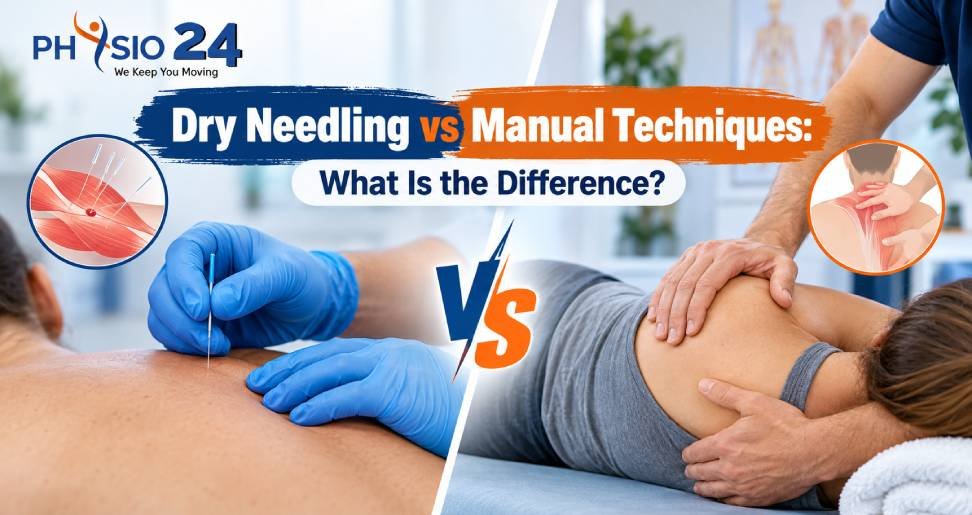
Muscle pain, stiffness, restricted movement, and sports-related injuries can affect everyday activities and make even simple movements uncomfortable. Physiotherapy offers several approaches to help manage these problems, and two commonly discussed options are Dry Needling and manual techniques. Although both may be used to address musculoskeletal discomfort, they work in different ways and are selected according to a person’s symptoms, movement limitations, and treatment goals.
Understanding the difference between Dry Needling and manual techniques can help patients have more informed conversations with their physiotherapist. It is also useful to understand how these approaches relate to other hands-on methods, including Chiropractic and Osteopathic Manipulation.
What Is Dry Needling?
Dry Needling is a technique in which a trained healthcare professional uses a thin, sterile needle to target specific areas of muscular or soft-tissue dysfunction. Unlike acupuncture, which is traditionally based on traditional Chinese medicine concepts and acupuncture points, Dry Needling is generally used within a modern musculoskeletal assessment and treatment framework.
A physiotherapist may consider Dry Needling when muscle tightness, trigger points, or certain movement-related problems are contributing to a patient’s symptoms. The needle is inserted into selected tissues based on the individual’s assessment.
The goal may include reducing muscle tension, improving local movement, and supporting rehabilitation. Dry Needling is not appropriate for every person or every condition, so an appropriate clinical assessment should come before treatment.
What Are Manual Techniques?
Manual techniques involve hands-on treatment performed by a trained healthcare professional. Depending on the technique and the patient’s condition, treatment may involve soft-tissue work, joint mobilization, stretching, or other controlled movements.
Manual therapy can be incorporated into a broader Physiotherapy program to address stiffness, reduced mobility, muscular tension, and movement limitations. Rather than using needles, the therapist uses their hands or, in some cases, carefully controlled mechanical forces to work with muscles, joints, and surrounding tissues.
Manual techniques are often combined with therapeutic exercises. This combination can help patients work on both immediate movement limitations and longer-term strength, flexibility, coordination, and function.
Dry Needling vs Manual Techniques: The Main Difference
The clearest difference is the method used to influence the affected tissues.
Dry Needling uses a fine needle, while manual techniques use hands-on contact and controlled movement. However, the difference is not simply about needles versus hands. The assessment, clinical reasoning, treatment goals, and patient’s response are also important.
For example, a physiotherapist may use Dry Needling as one part of treatment when muscular trigger points or localized muscle tension are relevant to the patient’s presentation. In another situation, manual techniques may be selected to address joint stiffness or soft-tissue restrictions.
Neither approach should automatically be considered suitable for every type of pain. Treatment should be based on an individual’s assessment rather than simply choosing the technique that sounds more advanced or intensive.
How Physiotherapy Uses These Techniques
Modern Physiotherapy generally focuses on restoring movement and helping people participate in daily activities, work, exercise, or sport. Depending on the condition, a physiotherapist may use several components during rehabilitation.
These can include:
- Exercise therapy
- Movement retraining
- Strength and conditioning
- Education about pain and movement
- Manual techniques
- Mobility exercises
- Dry Needling when clinically appropriate
This means Dry Needling and manual therapy are not necessarily competing treatment systems. They can sometimes be used alongside exercise and other rehabilitation strategies.
For example, someone experiencing muscular tightness may receive a combination of hands-on treatment, targeted exercises, movement education, and gradual strengthening. The exact combination depends on the assessment and rehabilitation goals.
Where Does Chiropractic Fit In?
Chiropractic is another healthcare approach that may include hands-on techniques, particularly those directed toward the musculoskeletal system. Chiropractic care can involve spinal or joint manipulation and other manual approaches depending on the practitioner and the patient’s presentation.
It is important to distinguish Chiropractic from Dry Needling. Dry Needling specifically involves the insertion of fine needles into selected tissues, whereas Chiropractic treatment may involve manual adjustments or other hands-on methods.
There can be some overlap in the broader goal of improving movement and managing musculoskeletal symptoms, but the techniques and professional training involved are different.
What Is Osteopathic Manipulation?
Osteopathic Manipulation refers to hands-on techniques used within osteopathic practice to assess and address certain musculoskeletal dysfunctions. Depending on the practitioner and healthcare system, techniques can include mobilization, manipulation, stretching, and other manual approaches.
Like other hands-on approaches, Osteopathic Manipulation does not use needles in the way Dry Needling does. Its focus can include relationships between body structures, movement, and function.
Patients should understand that the names of manual approaches can vary between countries and healthcare professions. Therefore, asking a practitioner which specific technique they plan to use can provide greater clarity.
Which Technique Is Better?
There is no single technique that is automatically best for everyone. Dry Needling and manual techniques have different applications, and the appropriate choice depends on factors such as the patient’s symptoms, medical history, physical findings, treatment goals, and response to previous care.
A physiotherapist may recommend manual treatment when improving mobility or addressing certain soft-tissue or joint restrictions is appropriate. Dry Needling may be considered when particular muscular findings make it a reasonable part of the rehabilitation plan.
In many cases, treatment does not depend on one technique alone. Exercise and active rehabilitation remain important components of many physiotherapy programs because patients need to develop the strength, mobility, control, and confidence required for everyday activities.
What Should You Expect During Treatment?
Before treatment begins, a qualified practitioner should assess your symptoms and movement. They may ask about your medical history, pain, previous injuries, activities, and goals.
If Dry Needling is considered, the practitioner should explain the procedure and discuss relevant precautions. Some people may experience temporary soreness or sensitivity afterward.
With manual techniques, patients may experience pressure, stretching, or movement of a joint or soft tissue. The response can vary depending on the technique used and the individual’s condition.
Patients should communicate with their practitioner throughout treatment, particularly if something feels unusually painful or uncomfortable.
Choosing the Right Approach for Your Needs
The most useful question is often not “Which technique is better?” but rather “Which approach is appropriate for my condition and rehabilitation goals?”
A qualified physiotherapist can assess your movement and determine whether manual techniques, Dry Needling, exercise therapy, or a combination of approaches may be appropriate. Other healthcare professionals, including Chiropractic or osteopathic practitioners, may also use different hands-on approaches depending on their professional scope and training.
The objective should be a treatment plan that is appropriate, clearly explained, and focused on improving function rather than relying on a single technique.
Final Thoughts
Dry Needling and manual techniques are distinct approaches that may be incorporated into musculoskeletal rehabilitation. Dry Needling uses fine needles to target selected tissues, while manual techniques use hands-on methods such as mobilization, soft-tissue techniques, and controlled movements.
Physiotherapy can combine these approaches with exercise, education, and movement rehabilitation when clinically appropriate. Chiropractic and Osteopathic Manipulation are additional hands-on approaches with their own techniques and professional frameworks.
If you are experiencing persistent pain, stiffness, or movement difficulties, an appropriate assessment can help identify potential contributing factors and determine which rehabilitation strategies may be suitable for you. Rather than choosing a treatment based solely on its name, discuss your symptoms and goals with a qualified healthcare professional so that your treatment can be tailored to your individual needs.


Leave a Reply
You must belogged in to post a comment.