


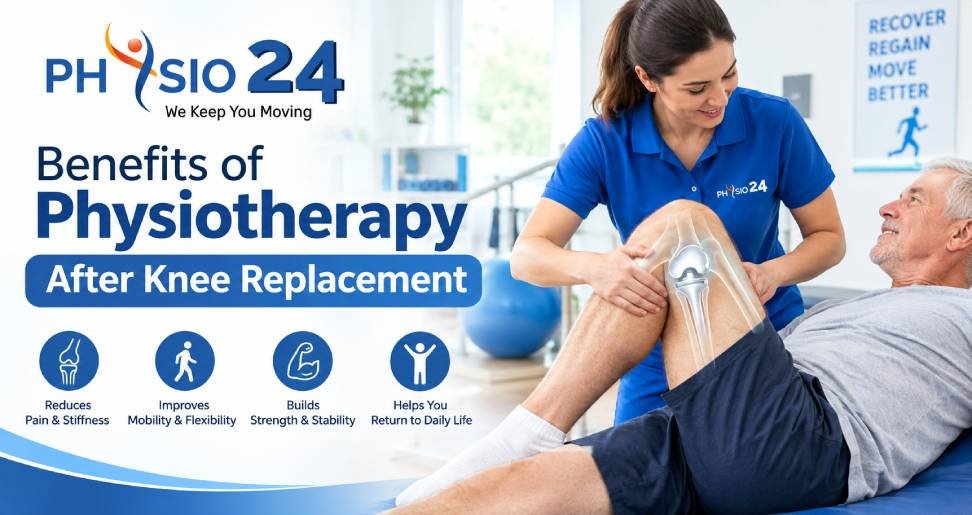
Knee replacement surgery can be an important step toward improving mobility and reducing long-term knee pain. However, surgery is only one part of the recovery process. What happens after the procedure can have a major impact on how comfortably and confidently a person returns to everyday activities. Physiotherapy after knee replacement plays an important role in helping patients restore movement, rebuild strength, improve balance, and gradually return to their normal routines.
Following a structured rehabilitation program can also help patients understand how to move safely while their knee heals. From simple exercises in the early stages to progressive strengthening and mobility work, physiotherapy provides a planned approach to recovery.
Why Is Physiotherapy Important After Knee Replacement?
After knee replacement surgery, the muscles surrounding the knee may become weak because of reduced activity. Swelling, stiffness, discomfort, and limited range of motion can also make everyday movements challenging.
Physiotherapy focuses on gradually addressing these limitations. A physiotherapist may assess the patient’s movement, strength, flexibility, balance, and functional abilities before developing an appropriate rehabilitation program.
Regular physiotherapy can help with:
- Improving knee flexibility and range of motion
- Strengthening muscles around the knee and hip
- Improving walking ability
- Supporting balance and coordination
- Reducing stiffness associated with inactivity
- Building confidence during everyday movements
- Gradually returning to functional activities
The rehabilitation plan should always be individualized because recovery can vary depending on the person’s age, overall condition, surgical technique, activity level, and medical advice.
1. Helps Restore Knee Movement
Regaining a comfortable range of motion is one of the important goals after knee replacement. Stiffness can make activities such as sitting down, standing up, walking, and using stairs more difficult.
A physiotherapist can introduce gentle mobility exercises and gradually progress them according to recovery. Consistency is important because controlled movement can help the patient work toward functional mobility without unnecessarily overloading the recovering joint.
Patients should follow the exercise recommendations provided by their healthcare professional rather than trying advanced exercises too soon.
2. Builds Strength Around the Knee
The muscles supporting the knee can become weaker following surgery and periods of reduced activity. Strengthening these muscles is therefore an important part of rehabilitation.
A physiotherapy program may include progressive exercises for the quadriceps, hamstrings, glutes, and other supporting muscles. Stronger muscles can make activities such as walking, standing, and climbing stairs easier.
Strength training generally progresses gradually. The objective is not to exercise as hard as possible but to improve strength safely and consistently.
3. Supports Better Walking
Walking mechanics may temporarily change after knee replacement. Some patients initially rely on walking aids and may develop cautious movement patterns because of discomfort or weakness.
Physiotherapy can help patients practice appropriate walking techniques and gradually improve their confidence. Depending on individual progress, a physiotherapist may provide guidance on using a walker, cane, or other mobility aid before transitioning toward independent walking.
Improving walking ability is especially valuable because it helps patients become more independent in daily life.
4. Helps Improve Balance and Stability
Balance can be affected by muscle weakness, changes in movement patterns, and reduced activity following surgery. Rehabilitation may therefore include exercises designed to improve stability and coordination.
Better balance can make everyday activities more manageable and may help patients feel more confident when moving around the home or outdoors.
5. Encourages a Gradual Return to Daily Activities
Recovery is not simply about being able to bend the knee. The ultimate goal is often to return to meaningful everyday activities.
Physiotherapy can help patients gradually work toward tasks such as:
- Getting in and out of a chair
- Walking around the house
- Using stairs
- Getting in and out of a vehicle
- Completing household activities
- Returning to appropriate recreational activities
The timeline varies from person to person, so rehabilitation should be based on individual progress and the guidance of the surgical and rehabilitation team.
Can Chiropractic, Osteopathic Manipulation, or Dry Needling Be Used?
Patients may encounter different approaches to musculoskeletal care during rehabilitation, including Chiropractic, Osteopathic Manipulation, Dry Needling, and Physiotherapy. However, these approaches are not interchangeable, and not every technique is appropriate immediately after knee replacement.
Physiotherapy is commonly used to guide postoperative movement, strengthening, mobility, and functional rehabilitation.
Chiropractic care may involve hands-on approaches to musculoskeletal problems, but postoperative patients should discuss any proposed treatment with their orthopedic surgeon or rehabilitation professional before receiving treatment.
Osteopathic Manipulation involves hands-on techniques intended to address musculoskeletal function. After joint replacement, any manual technique should be considered carefully and performed only when medically appropriate.
Dry Needling is a technique involving fine needles that may be used for certain muscular problems. It should not be assumed to be appropriate around a recently operated knee. The surgical site, healing stage, medications, and individual medical circumstances must be considered first.
The safest approach is to communicate openly with the healthcare team and make sure all rehabilitation techniques are appropriate for the stage of recovery.
How Long Does Recovery Take?
There is no single recovery timeline that applies to everyone. Some people progress quickly, while others require additional time to regain strength and mobility.
Factors that can influence recovery include:
- Pre-surgery fitness and mobility
- Age and general health
- Muscle strength before surgery
- Surgical recovery
- Consistency with rehabilitation
- Presence of other medical conditions
- Individual response to exercise
Following the recommended rehabilitation plan and attending scheduled appointments can help patients understand what they should work on at each stage.
Tips for a Successful Physiotherapy Recovery
Patients can support their rehabilitation by following their healthcare team’s recommendations and maintaining consistency.
Helpful habits may include:
- Follow your prescribed exercise program. Avoid adding difficult exercises without professional guidance.
- Increase activity gradually. More activity is not always better during early recovery.
- Use mobility aids correctly. Follow professional instructions about when and how to use them.
- Pay attention to symptoms. Report unusual or worsening symptoms to your healthcare provider.
- Keep appointments. Progress can be monitored and exercises adjusted as recovery develops.
- Maintain realistic expectations. Recovery takes time, and progress may not be identical every day.
Choosing Quality Rehabilitation Support
A well-structured rehabilitation plan can make the recovery process more organized and manageable. Patients should look for qualified healthcare professionals who understand postoperative rehabilitation and can tailor exercises according to individual needs.
Physiotherapy is particularly valuable because it combines assessment, movement training, strengthening, and functional rehabilitation. The right program can help patients progressively rebuild their abilities rather than rushing into demanding activities.
For people who appreciate quality products and practical lifestyle accessories during recovery, Physio 24 offers thoughtfully crafted leather products designed for everyday use. From premium leather wallets to personalized options, the brand focuses on combining practical functionality with timeless design. A well-made wallet can also make a useful gift for someone beginning a new chapter after a major health milestone.
Final Thoughts
Physiotherapy after knee replacement is an important part of the journey from surgery toward improved mobility and independence. By focusing on flexibility, strength, walking, balance, and functional movement, rehabilitation can help patients progressively rebuild confidence in their knee.
Approaches such as Chiropractic, Osteopathic Manipulation, and Dry Needling may be relevant in specific musculoskeletal situations, but their suitability after knee replacement should always be determined by qualified healthcare professionals and the patient’s surgical recovery plan.
Most importantly, recovery should be gradual and individualized. With appropriate professional guidance, consistent rehabilitation, and patience, many patients can work toward returning to their everyday activities with greater comfort and confidence.


Leave a Reply
You must belogged in to post a comment.