


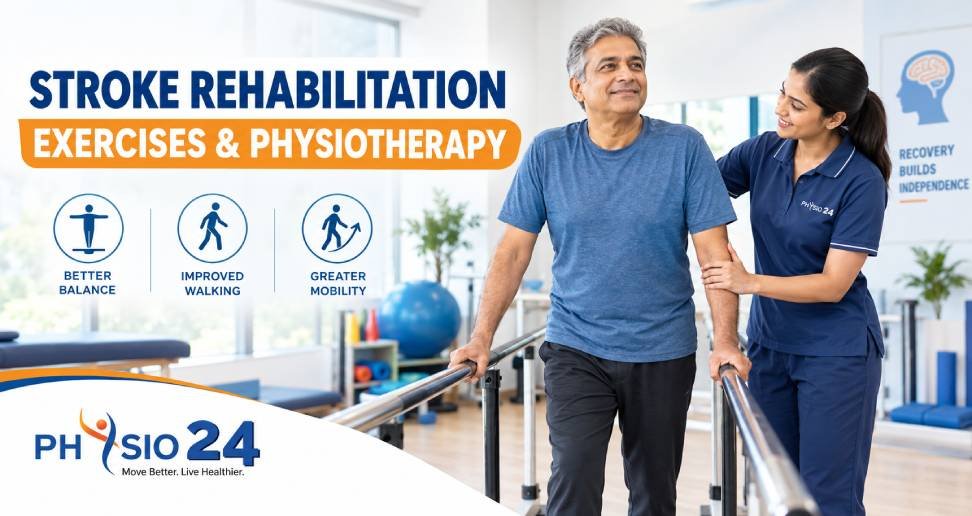
A stroke can significantly affect a person’s movement, balance, coordination, speech, and ability to perform everyday activities. Recovery may take weeks, months, or even years, depending on the severity of the stroke and the individual’s overall health. With appropriate medical care, consistent rehabilitation, and professional guidance, many stroke survivors can improve their functional abilities and regain greater independence.
Stroke rehabilitation exercises and physiotherapy play an important role in helping individuals rebuild strength, improve mobility, and relearn essential movements. A personalized rehabilitation programme can address physical limitations while supporting confidence and quality of life.
For individuals seeking professional rehabilitation support, Physio 24 offers physiotherapy services designed to address different movement-related concerns and help patients work towards their functional goals.
What Is Stroke Rehabilitation?
Stroke rehabilitation is a structured process that helps individuals recover or adapt to physical and cognitive difficulties caused by a stroke. A stroke occurs when blood flow to part of the brain is interrupted or when bleeding damages brain tissue. The resulting effects depend on which part of the brain is affected.
Some stroke survivors experience weakness or paralysis on one side of the body, while others have difficulty walking, maintaining balance, or coordinating their movements. Everyday tasks such as standing up, dressing, bathing, and climbing stairs may also become challenging.
Rehabilitation aims to improve the abilities that have been affected and help individuals participate more comfortably in daily life. Treatment may involve physiotherapy, occupational therapy, speech and language therapy, and other specialist interventions depending on individual needs.
Why Is Physiotherapy Important After a Stroke?
Physiotherapy is an essential component of physical recovery following a stroke. A physiotherapist assesses muscle strength, joint movement, balance, posture, coordination, and walking ability before developing an appropriate treatment plan.
Regular, supervised rehabilitation can help patients practise functional movements and improve their ability to complete daily activities.
The main benefits of stroke physiotherapy include:
- Improved muscle strength: Targeted exercises help address weakness in affected limbs.
- Better balance and coordination: Specific activities help patients practise maintaining stability while sitting, standing, and walking.
- Improved mobility: Walking and movement exercises support greater independence.
- Reduced risk of complications: Appropriate positioning and movement can help reduce the risk of stiffness, contractures, and other problems associated with immobility.
- Greater functional independence: Practising everyday movements can make routine activities easier to manage.
The rehabilitation plan should reflect the patient’s medical condition, physical abilities, and recovery goals.
Effective Stroke Rehabilitation Exercises
Stroke rehabilitation exercises should be selected according to the individual’s abilities and medical advice. Some exercises may require assistance from a trained physiotherapist or caregiver. Patients should not attempt challenging movements independently if they have significant weakness, dizziness, or balance difficulties.
1. Range-of-Motion Exercises
Range-of-motion exercises help maintain flexibility and prevent stiffness in joints affected by reduced movement.
These exercises may involve gently moving the shoulders, elbows, wrists, fingers, hips, knees, and ankles. If a patient cannot move a limb independently, a trained caregiver or physiotherapist may assist with the movement.
Movements should be slow and comfortable. Never force a joint beyond its available range, particularly when shoulder weakness or pain is present.
2. Strengthening Exercises
Muscle weakness is common after a stroke. Strengthening exercises help patients develop the strength required for standing, walking, and everyday tasks.
Depending on the patient’s abilities, exercises may include:
- Gently squeezing a soft ball.
- Straightening and bending the knee while seated.
- Performing supported sit-to-stand movements.
- Lifting the heel while seated.
- Practising controlled arm movements.
A physiotherapist can adjust repetitions, resistance, and difficulty as the patient progresses.
3. Balance Training
Balance difficulties can increase the risk of falls after a stroke. Balance training focuses on improving postural control and stability.
Exercises may begin with sitting upright and shifting body weight gently from one side to another. Patients who can stand safely may progress to supported standing, controlled weight shifting, and reaching for nearby objects.
These activities should be performed with appropriate support and supervision, particularly during the early stages of recovery.
4. Walking and Gait Training
Walking may become difficult when a stroke affects leg strength, coordination, or balance. Gait training helps patients practise the movements involved in walking.
A rehabilitation programme may include supported standing, stepping in place, practising steps between parallel bars, and walking short distances with an appropriate walking aid.
The physiotherapist may also assess walking posture, step length, foot placement, and weight distribution. Progress should be gradual, with attention to safety and fatigue.
5. Hand and Finger Exercises
Stroke-related weakness can affect grip strength and fine motor skills, making activities such as buttoning clothes, holding a cup, or using cutlery difficult.
Hand rehabilitation may include opening and closing the fingers, touching the thumb to each fingertip, gently squeezing a soft object, and practising picking up lightweight objects.
The exercises should focus on controlled movement rather than speed. Repeated, purposeful practice can help patients work towards improved hand function.
6. Sit-to-Stand Exercises
Standing up from a chair is an important everyday movement that requires strength, balance, and coordination.
When medically appropriate, patients can practise rising from a stable chair with assistance from a physiotherapist. The therapist may guide foot placement, posture, and weight distribution to encourage safer movement.
Patients should not practise this exercise alone if they are at risk of falling.
How Physiotherapists Develop a Stroke Recovery Plan
Every stroke survivor has different rehabilitation needs. A physiotherapist usually begins with an assessment of movement, strength, balance, joint flexibility, and functional limitations.
Based on the findings, the therapist establishes realistic goals and creates a programme that progresses as the patient’s abilities improve.
For example, an early goal may involve maintaining a stable sitting position. Later goals may include standing with assistance, transferring between a bed and chair, or walking with a mobility aid.
Consistency is important, but recovery should not be rushed. Rest periods help manage fatigue, while regular reassessment allows the therapist to modify the exercises according to progress.
Family members and caregivers may also learn safe positioning, transfer techniques, and appropriate ways to support prescribed exercises.
Can Chiropractic, Osteopathic Manipulation, and Dry Needling Help After a Stroke?
Stroke survivors sometimes experience secondary musculoskeletal problems, including muscle tightness, joint discomfort, and altered posture. However, these concerns require careful assessment because neurological impairments can affect treatment safety.
Chiropractic: Chiropractic care commonly focuses on musculoskeletal conditions. High-velocity spinal manipulation should not be considered a routine stroke rehabilitation treatment. Any proposed chiropractic intervention should be discussed with the patient’s treating medical team, particularly when cardiovascular or neurological concerns are present.
Osteopathic Manipulation: Osteopathic manipulation includes hands-on techniques intended to address musculoskeletal restrictions. Its role in stroke recovery is limited by the available evidence and the patient’s individual condition. Gentle techniques, if considered, should only be used following appropriate assessment and medical clearance.
Dry Needling: Dry needling is used by trained practitioners to address certain muscular pain and tension conditions. It does not reverse brain damage caused by a stroke and is not a primary treatment for restoring neurological function. Bleeding risk, medications such as anticoagulants, altered sensation, and other medical factors must be considered before treatment.
Physiotherapy: Physiotherapy remains a central part of physical stroke rehabilitation. It focuses on functional movement, strength, balance, mobility, and practising activities relevant to everyday life.
These approaches are not interchangeable. The patient’s stroke team and qualified rehabilitation professionals should determine which interventions, if any, are appropriate.
Tips for Supporting Recovery at Home
A safe home environment and a consistent routine can support rehabilitation between professional sessions.
Consider the following steps:
- Follow the exercise plan prescribed by the physiotherapist.
- Practise only movements that have been assessed as safe.
- Remove loose rugs and obstacles from walking areas.
- Install grab bars or other recommended support equipment.
- Wear secure, non-slip footwear.
- Allow sufficient time for rest and recovery.
- Attend follow-up appointments and report any new symptoms.
Caregivers should avoid pulling the affected arm when helping a patient stand or move, as this may cause shoulder injury.
Seek immediate emergency medical attention if new or sudden stroke symptoms develop, including facial drooping, arm weakness, speech difficulty, sudden vision problems, or loss of balance. Do not assume that these symptoms are part of the existing recovery process.
How Physio 24 Can Support Rehabilitation Goals
Recovering after a stroke can be challenging, but a structured rehabilitation programme can help patients work towards greater independence and improved movement.
Physio 24 provides physiotherapy services for individuals experiencing different mobility and musculoskeletal concerns. Depending on an individual’s needs and clinical assessment, relevant services may include Neurological Physiotherapy, Manual Therapy, and Orthopedic Physiotherapy.
Patients and caregivers can explore the available Physiotherapy Services to learn more about rehabilitation support and discuss suitable treatment options with a qualified professional.
The appropriate programme will depend on the patient’s stroke history, current abilities, medical clearance, and recovery goals.
Conclusion
Stroke rehabilitation exercises and physiotherapy can help survivors improve strength, balance, coordination, and functional mobility. Exercises involving range of motion, strengthening, balance, walking, and hand coordination may form part of an individualized rehabilitation programme.
Recovery is different for everyone, and progress may occur gradually. Professional assessment, regular practice, caregiver support, and a safe home environment can all contribute to the rehabilitation process.
Working with a qualified physiotherapist helps ensure that exercises are appropriate, achievable, and adapted to the patient’s changing needs. With consistent, carefully supervised rehabilitation, stroke survivors can work towards safer movement, greater independence, and an improved quality of life.


Leave a Reply
You must belogged in to post a comment.