


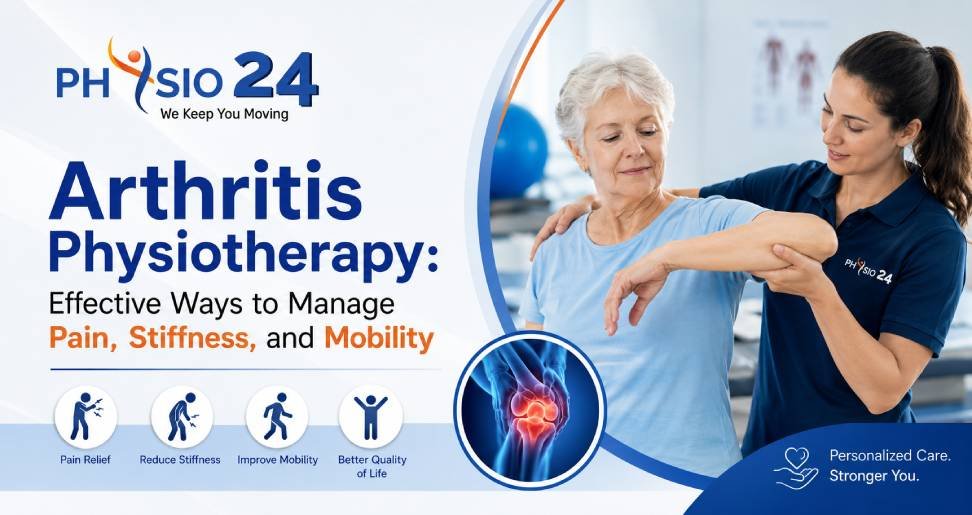
Arthritis can make everyday activities such as walking, climbing stairs, getting out of bed, or even holding objects uncomfortable. While arthritis is often associated with ageing, it can affect people at different stages of life and may significantly impact mobility and quality of life. The good news is that appropriate treatment and regular physical activity can help manage many arthritis-related symptoms.
Arthritis physiotherapy is an important part of conservative care because it focuses on reducing pain, improving joint movement, strengthening supporting muscles, and helping people remain active. At Physio 24, personalised physiotherapy and rehabilitation approaches can help individuals manage musculoskeletal problems while working toward better movement and function.
What Is Arthritis?
Arthritis is a general term used to describe conditions that affect the joints. Osteoarthritis and rheumatoid arthritis are two common forms, although there are many different types.
Osteoarthritis commonly develops when the tissues within a joint gradually change over time. It can affect areas such as the knees, hips, hands, and spine. Rheumatoid arthritis, on the other hand, is an autoimmune condition that can cause inflammation, pain, stiffness, and swelling in multiple joints.
Common symptoms may include:
- Joint pain
- Morning stiffness
- Swelling or tenderness
- Reduced range of motion
- Muscle weakness
- Difficulty walking or performing everyday activities
- Joint stiffness after periods of inactivity
The severity and symptoms can vary considerably from person to person, which is why an individual assessment is important before starting a treatment programme.
How Can Arthritis Physiotherapy Help?
The primary goal of arthritis physiotherapy is not simply to reduce pain temporarily. A well-designed rehabilitation programme aims to improve physical function and help individuals manage their condition over the long term.
A physiotherapist may assess joint movement, muscle strength, posture, walking patterns, flexibility, balance, and functional limitations before developing a suitable treatment plan.
1. Therapeutic Exercise
Exercise is one of the key components of arthritis rehabilitation. Depending on the affected joints and the individual’s physical ability, a physiotherapist may recommend strengthening, flexibility, mobility, balance, and low-impact cardiovascular exercises.
Strengthening the muscles surrounding an affected joint can provide better support and improve functional movement. Exercises may also help maintain joint mobility and reduce the effects of prolonged inactivity.
At Physio 24, physiotherapy programmes are designed around the individual’s condition, functional requirements, and rehabilitation goals rather than relying on a one-size-fits-all approach.
2. Manual Therapy
Manual therapy may be incorporated into arthritis rehabilitation when appropriate. Techniques can include soft-tissue work, joint mobilisation, and other hands-on approaches designed to improve movement and reduce musculoskeletal discomfort.
Manual therapy is generally used alongside exercise and education rather than as the only component of treatment.
If you are looking for structured Physiotherapy for joint pain, rehabilitation, or mobility problems, Physio 24 provides physiotherapy and rehabilitation services designed to address pain and movement limitations.
Chiropractic Care for Joint and Musculoskeletal Problems
Chiropractic care is another approach that may be considered as part of a broader musculoskeletal management plan. Chiropractic treatment generally focuses on the relationship between the musculoskeletal system and movement, particularly the spine and joints.
For some patients, appropriately selected manual techniques may complement physiotherapy by addressing movement restrictions or associated musculoskeletal discomfort.
However, treatment should always be based on an individual’s condition and clinical assessment. Chiropractic care should not be viewed as a replacement for medical diagnosis or comprehensive arthritis management.
Physio 24 lists osteopathic and chiropractic adjustment among its treatment approaches, allowing appropriate patients to receive a broader range of musculoskeletal care.
Osteopathic Manipulation and Arthritis Management
Osteopathic Manipulation involves hands-on techniques intended to address restrictions in movement and the function of the musculoskeletal system.
For someone experiencing arthritis, treatment may focus on improving mobility around affected or compensating areas. For example, restricted movement in one region can sometimes influence how a person moves other parts of the body.
Osteopathic techniques should be selected according to the patient’s individual presentation. They are most useful when incorporated into an overall rehabilitation strategy that may include exercise, movement education, and lifestyle guidance.
At Physio 24, osteopathic and chiropractic adjustment is included among the clinic’s listed treatment approaches.
Can Dry Needling Help With Arthritis-Related Pain?
Dry Needling is a technique used by appropriately trained practitioners to target specific muscles and trigger points. It may be considered when muscle tightness or myofascial pain contributes to a person’s symptoms.
Arthritis itself is a joint-related condition, so dry needling does not treat the underlying cause of arthritis. Instead, it may be used as part of a broader pain-management and rehabilitation programme when clinically appropriate.
For example, a person with chronic knee discomfort may develop tight or overactive muscles around the joint because of altered movement patterns. Addressing associated muscular problems may help support more comfortable movement and participation in exercise.
Physio 24 identifies Dry Needling as one of its available treatment approaches, alongside physiotherapy and manual therapy.
Why Exercise Matters for Arthritis
People experiencing joint pain sometimes reduce their physical activity because they are worried that movement will make their symptoms worse. However, avoiding movement completely can contribute to muscle weakness, reduced flexibility, and loss of functional capacity.
A physiotherapist can help identify appropriate activities and modify exercises according to pain, mobility, age, fitness level, and medical considerations.
Low-impact activities such as walking, cycling, swimming, mobility exercises, and controlled strengthening may be appropriate for many people, although the right programme depends on the individual’s circumstances.
Consistency is often more important than intensity. Small amounts of appropriate movement performed regularly can be easier to maintain than occasional strenuous exercise.
Lifestyle Tips Alongside Arthritis Physiotherapy
Physiotherapy works best when supported by healthy everyday habits. Depending on individual needs, useful strategies may include:
- Staying physically active within comfortable limits
- Following prescribed home exercises
- Maintaining a healthy body weight where appropriate
- Taking regular movement breaks during prolonged sitting
- Using good posture and body mechanics
- Getting adequate rest and recovery
- Following medical advice for diagnosed inflammatory arthritis
- Avoiding activities that consistently aggravate symptoms
If joint pain is persistent, worsening, associated with significant swelling, or accompanied by unexplained symptoms, it is important to seek appropriate medical evaluation.
When Should You Consider Arthritis Physiotherapy?
Consider consulting a physiotherapist if arthritis symptoms are interfering with your normal activities or making movement increasingly difficult.
Professional assessment can be particularly useful when you experience:
- Persistent joint stiffness
- Difficulty walking or climbing stairs
- Reduced joint mobility
- Weakness around an affected joint
- Recurring pain during daily activities
- Difficulty exercising because of joint discomfort
- Reduced independence due to mobility problems
Early professional guidance can help you understand your movement limitations and establish realistic rehabilitation goals.
Choose a Personalised Approach With Physio 24
Managing arthritis is usually about finding sustainable ways to move better rather than searching for a single treatment that works for everyone. Physio 24 takes a rehabilitation-focused approach that includes physiotherapy and a range of complementary treatment options.
Its listed services include Physiotherapy, Dry Needling, Manual Therapy, Osteopathic and Chiropractic Adjustment, therapeutic tapping, rehabilitation, ergonomic advice, and other specialised care options.
Whether your primary concern is joint stiffness, reduced mobility, muscular weakness, or difficulty performing everyday activities, an appropriate assessment can help determine which combination of treatments and exercises may be suitable for you.
Conclusion
Arthritis physiotherapy can play an important role in helping people manage joint pain, stiffness, weakness, and reduced mobility. Through personalised exercise programmes, manual therapy, movement education, and appropriate complementary techniques, physiotherapy can support better function and help people remain active.
Treatments such as Chiropractic, Osteopathic Manipulation, and Dry Needling may also have a role for selected patients when incorporated into an appropriate rehabilitation plan.
If arthritis is affecting your movement or everyday life, consider speaking with the team at Physio 24 about an individual assessment and rehabilitation programme designed around your needs.


Leave a Reply
You must belogged in to post a comment.