


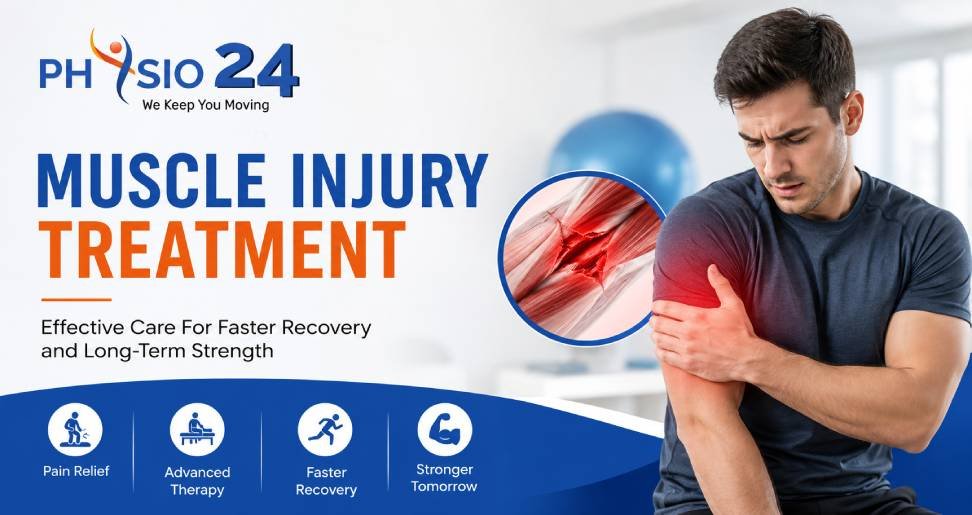
Muscle injuries are common among athletes, fitness enthusiasts, physically active people and even individuals who perform repetitive activities at work. A sudden sprint, incorrect lifting technique, overstretching, excessive exercise or repetitive movement can place excessive stress on muscle fibres and result in pain, stiffness, weakness or reduced movement.
Understanding the right Muscle Injury Treatment is important because returning to exercise too quickly can increase the risk of reinjury. A structured rehabilitation programme can help restore movement, strength and confidence while supporting a safe return to everyday activities and sport.
What Is a Muscle Injury?
A muscle injury occurs when muscle fibres are overstretched or torn. A mild injury may involve only a small number of fibres, while a more serious tear can significantly affect muscle function. Muscle strains are commonly described in three grades according to their severity.
Grade 1 injuries are generally mild and involve limited fibre damage. Grade 2 injuries involve more substantial tearing and can cause noticeable weakness and difficulty moving. Grade 3 injuries are severe and may involve a complete muscle tear, sometimes requiring specialist medical treatment or surgery.
Common symptoms include:
- Muscle pain or tenderness
- Swelling or bruising
- Muscle weakness
- Spasms or cramping
- Reduced range of motion
- Difficulty using the affected muscle
- A sudden popping or tearing sensation during a severe injury
The symptoms and recovery time can vary depending on the location and severity of the injury.
Common Causes of Muscle Injuries
Muscle injuries can happen during sports, exercise, work or everyday activities. Sudden movements are a frequent cause, particularly when a muscle is not adequately prepared for intense activity.
Common causes include:
- Sprinting or sudden acceleration
- Jumping and landing
- Weightlifting with poor technique
- Sudden twisting movements
- Overtraining
- Repetitive physical activities
- Inadequate warm-up
- Muscle weakness or poor flexibility
- Returning to exercise too quickly after a previous injury
Athletes commonly experience muscle strains in areas such as the hamstrings, quadriceps, calves and groin. However, muscle injuries can occur in almost any part of the body.
What Should You Do Immediately After a Muscle Injury?
During the initial stage of an injury, protecting the affected area and reducing activities that increase pain can be helpful. Guidance for acute sprains and strains commonly includes protection, rest, ice, compression and elevation during the early phase. As symptoms improve, gentle movement can gradually be introduced rather than keeping the area completely inactive for an extended period.
Avoid immediately returning to strenuous exercise, running or heavy lifting. If pain is severe, swelling is significant, movement is severely restricted or you felt a sudden pop, professional assessment is recommended.
How Does Physiotherapy Help With Muscle Injury Treatment?
Physiotherapy can play an important role in muscle injury rehabilitation. Once the acute stage has settled, a physiotherapist can assess movement, flexibility, strength and functional limitations and develop an individualised recovery programme.
Treatment may include:
- Gentle mobility exercises
- Progressive strengthening
- Flexibility exercises
- Manual therapy
- Movement retraining
- Balance and coordination exercises
- Sport-specific rehabilitation
- Advice on gradually returning to activity
Physical therapy is commonly used to restore strength and range of motion following muscle injuries. The timing and intensity of exercises should be adjusted according to the injury and the individual’s recovery.
For patients searching for professional Muscle Injury Treatment, Physio 24 can be considered as part of a personalised rehabilitation approach, with treatment selected according to the individual’s symptoms, physical condition and recovery goals.
Chiropractic for Muscle and Movement-Related Problems
Chiropractic is another hands-on approach that may be considered for selected musculoskeletal problems. Chiropractic care can involve manual techniques designed to address movement and musculoskeletal function.
For someone recovering from a muscle injury, the suitability of chiropractic treatment depends on the location, severity and cause of the problem. It should not replace appropriate assessment when there is significant tissue damage or suspected fracture, nerve involvement or another serious condition.
When appropriate, chiropractic care may form part of a broader rehabilitation strategy alongside exercise and physiotherapy rather than being viewed as a standalone solution.
Osteopathic Manipulation
Osteopathic Manipulation involves hands-on techniques intended to address musculoskeletal movement and function. Depending on the patient’s condition, an appropriately trained practitioner may use different manual approaches as part of an overall treatment plan.
For muscle injuries, treatment should always be individualised. The primary objective should be to restore comfortable movement and function while avoiding techniques that could aggravate an acute injury.
A thorough assessment is particularly important when pain is severe, symptoms are worsening or there is substantial weakness or loss of function.
How Dry Needling May Support Recovery
Dry Needling is a technique involving the insertion of fine needles into selected muscles or soft tissues. It is sometimes used to address muscular tightness, trigger points and pain as part of a broader rehabilitation programme.
Dry needling should be performed by an appropriately trained professional following proper assessment and safety procedures. It is generally best considered as one component of treatment rather than a replacement for progressive exercise and rehabilitation.
For some patients, combining Dry Needling with exercise-based Physiotherapy, manual therapy and movement retraining may provide a more comprehensive approach to managing muscle-related symptoms.
Why Rehabilitation Is Important
One of the biggest mistakes after a muscle injury is returning to normal activity simply because the pain has reduced. Pain relief does not necessarily mean that the muscle has regained its previous strength and capacity.
A rehabilitation programme can progressively challenge the injured muscle. Early exercises may focus on comfortable movement, followed by strengthening and functional exercises. Later stages may involve running, jumping, resistance training or sport-specific movements where appropriate.
This gradual progression helps prepare the body for the demands of everyday activities, work or sport. Rehabilitation also provides an opportunity to identify factors such as weakness, poor movement patterns or inadequate conditioning that may contribute to future injuries.
How Long Does a Muscle Injury Take to Heal?
Recovery time varies considerably. A mild muscle strain may improve within a few weeks, while moderate injuries can take several weeks or longer. Severe muscle tears may require significantly more time and, in some cases, surgical management followed by rehabilitation.
Rather than relying only on a fixed timeline, recovery should be based on improvements in pain, movement, strength and functional ability.
When Should You Seek Professional Help?
You should consider professional assessment if your symptoms are severe, getting worse or failing to improve. Medical evaluation is particularly important if you cannot use the affected muscle, have substantial swelling or bruising, experience significant weakness, or felt a pop at the time of injury.
Urgent medical attention may be necessary when an injury causes obvious deformity, numbness, tingling, major loss of function or other concerning symptoms.
Preventing Future Muscle Injuries
Prevention starts with preparing the body for physical activity. Regular strength and conditioning can help improve muscle capacity, while appropriate warm-ups and gradual increases in exercise intensity can reduce unnecessary stress.
Helpful habits include:
- Warm up before strenuous activity
- Increase exercise intensity gradually
- Maintain muscle strength and flexibility
- Use correct lifting and exercise techniques
- Take adequate recovery periods
- Avoid suddenly increasing training volume
- Follow rehabilitation exercises after an injury
- Return to sport progressively rather than immediately
Conclusion
Effective Muscle Injury Treatment is not simply about reducing pain. A successful recovery involves protecting the injured tissue during the early stage, restoring movement, rebuilding strength and gradually preparing the body to return to normal activities.
Physiotherapy remains an important component of rehabilitation, while approaches such as Chiropractic, Osteopathic Manipulation and Dry Needling may be considered for appropriate patients following professional assessment. The most suitable combination depends on the nature and severity of the injury.
For people looking for a structured approach to muscle injury rehabilitation, Physio 24 can provide a patient-focused pathway that combines assessment, rehabilitation and appropriate treatment techniques. With the right guidance and a gradual return to activity, many muscle injuries can recover successfully while helping patients regain mobility, strength and confidence.


Leave a Reply
You must belogged in to post a comment.