


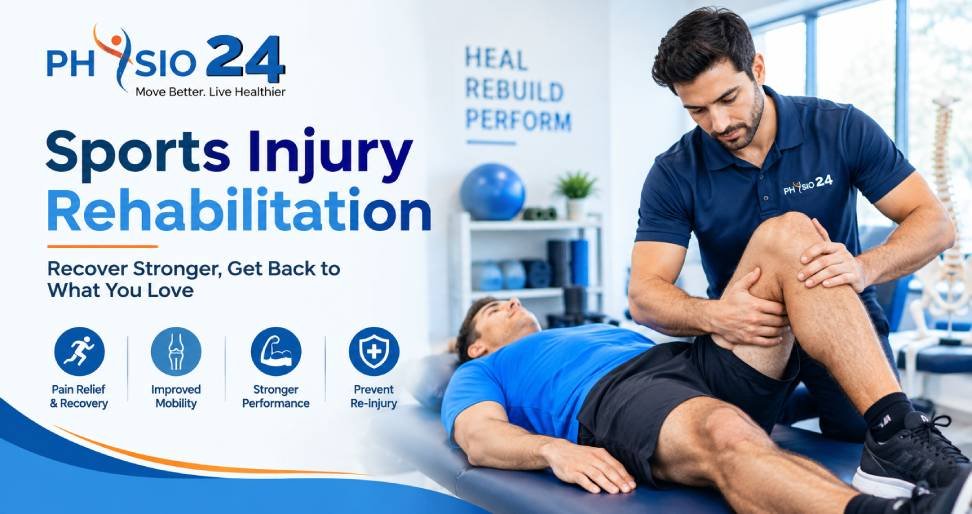
Sports and exercise are excellent ways to maintain fitness, strength and overall wellbeing. However, regular physical activity can sometimes lead to injuries such as muscle strains, ligament injuries, tendon problems, sprains, joint pain and overuse injuries. When an injury occurs, simply resting until the pain disappears may not always be enough. A structured sports injury rehabilitation programme can help restore movement, strength, flexibility and confidence so that you can gradually return to your normal activities.
Professional rehabilitation may involve assessment, targeted exercises, manual techniques and activity modification. Physiotherapy is commonly used for sports injuries and can help improve movement, strength and function following injury.
What Is Sports Injury Rehabilitation?
Sports injury rehabilitation is a structured process designed to help an injured person recover physical function and safely return to exercise or sport.
Depending on the injury, rehabilitation may focus on:
- Reducing pain and swelling
- Restoring joint mobility
- Improving muscle strength
- Developing flexibility
- Correcting movement or muscle imbalances
- Improving balance and coordination
- Rebuilding sporting movements
- Reducing the risk of future injury
The rehabilitation process should be personalised because every injury and every person is different. The severity of the injury, previous injuries, fitness level and the demands of the individual’s sport can all influence recovery.
Common Sports Injuries That May Require Rehabilitation
Sports injuries can affect almost any part of the body. Some common examples include:
1. Sprains
A sprain occurs when a ligament is stretched or damaged. Ankle sprains are particularly common among runners, footballers, basketball players and other athletes.
2. Muscle Strains
A muscle or tendon can become overstretched or damaged during sports activity. Hamstring, calf and groin strains are common examples.
3. Ligament Injuries
Ligaments provide stability to joints. Injuries involving structures such as the ACL, MCL or ankle ligaments may require a carefully planned rehabilitation programme.
4. Tendon Injuries
Repeated loading can contribute to tendon problems, particularly around areas such as the Achilles tendon, knee, elbow and shoulder.
5. Overuse Injuries
Not every sports injury happens suddenly. Repetitive movements, excessive training loads, inadequate recovery or changes in activity can contribute to persistent pain and tissue problems.
A proper assessment can help determine the appropriate rehabilitation approach rather than relying on guesswork.
The Role of Physiotherapy in Sports Injury Rehabilitation
Physiotherapy is an important component of sports injury rehabilitation. A physiotherapist can assess movement, strength, flexibility, balance and functional ability before developing an appropriate treatment plan.
Treatment may include exercise therapy, manual therapy, education and advice. NHS guidance also highlights strengthening and movement exercises as common components of physiotherapy.
An effective programme may progress through several stages:
Early recovery: The initial focus may be protecting the injured area, controlling symptoms and maintaining safe movement.
Mobility: Gentle exercises may be introduced to restore appropriate joint and soft-tissue movement.
Strength: Progressive resistance exercises can help rebuild the strength required for daily activities and sport.
Functional training: Exercises can become more specific to the movements required by the individual’s sport.
Return to sport: Running, jumping, changing direction, lifting or other sporting activities may be gradually reintroduced according to recovery and professional assessment.
Returning to sport too quickly can increase the risk of further injury. Public-health guidance recommends being properly rehabilitated before returning to sporting activity.
How Chiropractic Can Support Musculoskeletal Recovery
Chiropractic care focuses on the assessment and management of musculoskeletal problems and may involve hands-on techniques designed to improve movement and reduce discomfort.
For selected patients, chiropractic approaches may form part of a broader rehabilitation programme. The exact treatment should depend on the individual’s condition, assessment findings and clinical needs.
Importantly, hands-on treatment should generally complement active rehabilitation rather than replace appropriate exercises. Exercise-based rehabilitation is particularly important for restoring strength and function.
Osteopathic Manipulation for Movement and Function
Osteopathic Manipulation is another hands-on approach that may be considered for certain musculoskeletal problems. It can involve techniques such as mobilisation, stretching and manipulation to address movement restrictions and muscular or joint-related problems.
An appropriate assessment is important before using manipulation because not every technique is suitable for every injury. Treatment should be tailored to the individual’s symptoms, physical findings and rehabilitation goals.
For athletes, the wider objective should be to restore useful movement and function rather than simply providing short-term symptom relief.
Dry Needling in Sports Rehabilitation
Dry Needling is a technique involving the insertion of fine needles into selected tissues. It may be used as part of a broader rehabilitation programme for certain musculoskeletal conditions.
Some NHS treatment information lists dry needling among possible treatment options for specific tendon problems, while also emphasising progressive rehabilitation and exercise.
Dry needling should therefore be viewed as one possible component of treatment rather than a standalone solution. A qualified practitioner should determine whether it is appropriate for the individual’s condition.
Why Exercise Is Essential
One of the most important parts of rehabilitation is progressive exercise.
An injured athlete may initially need gentle movements, but the programme can gradually become more challenging. Depending on the injury and sport, this may include:
- Mobility exercises
- Resistance training
- Balance exercises
- Core strengthening
- Stability exercises
- Running drills
- Agility exercises
- Jumping and landing exercises
- Sport-specific movements
Exercise helps the body prepare for the physical demands it will face after returning to sport. NHS physiotherapy guidance describes individual exercise programmes and progressive functional rehabilitation as important components of musculoskeletal care.
Returning to Sport Safely
Returning to sport should be a gradual process rather than an immediate jump back into full training.
Before returning to competitive activity, an athlete may need to demonstrate appropriate movement, strength, balance and sport-specific function. The progression can move from basic exercises to more demanding activities and eventually full sporting movements.
The timeline varies considerably depending on the injury. For example, a mild sprain may recover relatively quickly, while a significant ligament, tendon or muscle injury may require a much longer rehabilitation programme.
If pain, swelling, weakness or restricted movement continues, professional assessment may be appropriate rather than repeatedly training through the symptoms.
Preventing Future Sports Injuries
Rehabilitation should not only focus on recovering from the current injury. It can also provide an opportunity to identify factors that may contribute to future problems.
Useful injury-prevention habits include:
- Warming up before exercise
- Increasing training intensity gradually
- Using appropriate equipment and footwear
- Maintaining strength and flexibility
- Allowing adequate recovery between demanding sessions
- Using correct sporting technique
- Avoiding sudden increases in training volume
- Addressing previous injuries properly
Previous injury is recognised as an important risk factor for future soft-tissue injury, making appropriate rehabilitation particularly important.
Get Professional Support for Sports Injury Rehabilitation
Whether you are a professional athlete, recreational sports enthusiast, gym-goer or someone who enjoys occasional exercise, an untreated injury can interfere with your performance and everyday life.
At Physio 24, sports injury rehabilitation can incorporate Physiotherapy, Chiropractic, Osteopathic Manipulation and Dry Needling, depending on the individual’s assessment and treatment requirements.
A personalised rehabilitation approach can help address pain and movement limitations while progressively rebuilding strength and function. The goal is not simply to feel better temporarily but to help you regain the physical capacity required for your normal activities and sporting goals.
If you have suffered a sports injury, getting an appropriate assessment can help you understand the problem and determine the next steps towards recovery. Do not ignore persistent pain or continue high-intensity activity when your body is not ready. A structured rehabilitation programme can provide a safer pathway back to movement, exercise and sport.


Leave a Reply
You must belogged in to post a comment.