


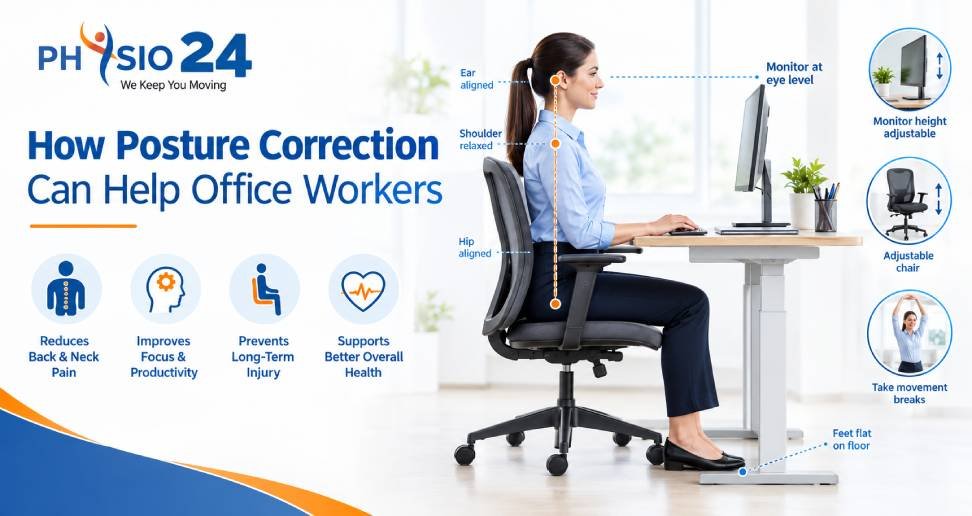
Office workers spend a significant portion of their day sitting at desks, working on computers, attending meetings, and managing daily tasks. Although these activities may seem harmless, maintaining the same position for extended periods can contribute to neck pain, back discomfort, shoulder stiffness, and muscle fatigue. Over time, poor posture and limited movement may affect comfort, concentration, and overall physical well-being.
Posture correction for office workers is an important part of maintaining a healthy working routine. By improving sitting habits, adjusting workstation ergonomics, and incorporating appropriate exercises, employees can reduce unnecessary strain on their bodies and support better movement throughout the day.
In this blog, we explore how posture correction works, its benefits for office workers, and practical ways to develop healthier posture habits.
What Is Posture Correction?
Posture correction involves improving the alignment and positioning of the body while sitting, standing, walking, or performing everyday activities. Good posture helps distribute physical stress more evenly across muscles, joints, and supporting structures.
For office workers, posture correction often focuses on maintaining a comfortable spinal position, keeping the shoulders relaxed, positioning the computer screen correctly, and avoiding prolonged periods of slouching.
However, good posture does not mean holding one rigid position throughout the day. The human body is designed to move, and regularly changing positions is just as important as maintaining a comfortable alignment.
With guidance from a qualified physiotherapist, individuals can identify their postural habits and develop strategies suited to their specific needs.
Common Posture Problems Among Office Workers
Several workplace habits can contribute to postural discomfort.
1. Forward Head Posture
Forward head posture occurs when the head moves forward relative to the shoulders. It can develop when workers lean toward computer screens, look down at laptops, or frequently use mobile phones.
This position may increase the workload on the neck and upper-back muscles, contributing to stiffness and discomfort.
2. Rounded Shoulders
Sitting with the shoulders rolled forward for extended periods can affect upper-body positioning. This habit is common among people who type continuously or work on laptops without appropriate desk arrangements.
Shoulder mobility exercises and adjustments to workstation positioning may help improve comfort.
3. Slouched Sitting
Slouching often involves allowing the lower back to collapse, rounding the upper back, and positioning the head forward. Remaining in this position for long periods may contribute to back discomfort and muscle fatigue.
Using suitable back support and taking regular movement breaks can help reduce prolonged loading.
4. Incorrect Desk and Screen Height
A monitor positioned too low or too high may encourage workers to bend their necks or raise their shoulders. Similarly, an unsuitable chair or incorrectly positioned keyboard can create unnecessary strain.
These problems can often be addressed through simple ergonomic adjustments.
How Posture Correction Helps Office Workers
Posture correction can improve workplace comfort and encourage healthier movement patterns. Its benefits depend on individual circumstances, consistency, and the underlying cause of any discomfort.
1. Helps Reduce Neck and Back Discomfort
Neck and back discomfort are common concerns among people who work at desks for long hours. Poor workstation positioning, repetitive movements, and prolonged static postures may contribute to these symptoms.
Posture correction encourages a more comfortable working position and reduces avoidable strain. Adjusting the chair, supporting the lower back, and positioning the monitor at a suitable height can help.
Targeted exercises may also improve flexibility, strength, and movement control.
If pain persists, becomes severe, or interferes with everyday activities, professional assessment can help identify the underlying cause.
2. Improves Muscle Balance and Flexibility
Spending much of the day sitting may reduce opportunities to move the hips, shoulders, and spine through their normal ranges.
A posture correction programme may include mobility exercises, gentle stretching, and strengthening activities designed around individual needs.
For example, chest stretches may help address tightness associated with prolonged forward-shoulder positioning, while exercises targeting the upper back can support shoulder control.
The goal is not simply to pull the shoulders backward. It is to develop balanced movement, adequate strength, and comfortable positioning.
3. Supports Better Workplace Ergonomics
Posture correction becomes more effective when combined with an appropriately arranged workstation.
Office workers can make the following adjustments:
- Keep the monitor directly in front of the body and at a comfortable viewing height.
- Position the keyboard and mouse so the shoulders remain relaxed and the elbows stay close to the body.
- Use a chair that supports the back comfortably.
- Keep the feet supported by the floor or a footrest.
- Avoid holding the phone between the shoulder and ear.
- Place frequently used items within easy reach.
These small changes can make it easier to work comfortably without constantly leaning forward or twisting.
4. Encourages Better Movement Habits
Even a well-arranged workstation cannot compensate for remaining still throughout the entire working day.
Regular movement breaks help office workers change positions, move their joints, and reduce prolonged static loading.
Consider standing briefly between meetings, walking while taking phone calls, or performing gentle shoulder rolls during breaks. A short walk every 30–60 minutes can serve as a useful reminder to move, although the ideal frequency depends on the person and their working conditions.
Movement should be comfortable and adapted to individual ability.
5. May Improve Comfort and Concentration
When employees experience recurring stiffness or discomfort, it may become harder to focus on demanding tasks. Taking frequent breaks to manage pain can also interrupt workflow.
Improving workstation comfort, incorporating movement, and addressing persistent musculoskeletal symptoms may help employees feel more comfortable during working hours.
Posture correction is not a guaranteed way to increase productivity, but creating a healthier working environment can support employee well-being and make daily tasks easier to manage.
Simple Posture Correction Exercises for Office Workers
The following exercises can be incorporated into a workplace routine, provided they are comfortable and appropriate for the individual.
1. Chin Tucks
Sit comfortably and look straight ahead. Gently draw the chin backward without tilting the head down. Hold for three to five seconds, then relax. Repeat five to ten times.
Benefit: Encourages neck control and awareness of head positioning.
2. Shoulder Blade Squeezes
Sit or stand with your shoulders relaxed. Gently draw the shoulder blades toward each other without shrugging. Hold for three to five seconds and repeat eight to ten times.
Benefit: Promotes awareness and control of the upper-back muscles.
3. Gentle Chest Stretch
Stand near a doorway and place your forearm against the doorframe. Slowly turn your body away until you feel a gentle stretch across the chest. Hold for 15–20 seconds without forcing the movement.
Benefit: May improve chest flexibility and make a comfortable shoulder position easier to maintain.
4. Standing Movement Breaks
Stand up, walk around, and gently move your hips and shoulders. Alternate between sitting and standing according to your comfort and work requirements.
Benefit: Breaks up prolonged sitting and encourages regular movement.
Stop any exercise that causes sharp pain, dizziness, tingling, or worsening symptoms. Seek professional advice if you have an existing injury or medical condition that affects movement.
The Role of Physiotherapy in Posture Correction
While ergonomic adjustments and regular movement can be helpful, some office workers need individualised support to address persistent discomfort or movement difficulties.
A qualified physiotherapist can assess posture, joint mobility, muscle strength, movement patterns, and workplace habits. Based on the findings, they can develop a treatment plan that may include therapeutic exercises, education, manual therapy when appropriate, and strategies for managing daily activities.
Physiotherapy focuses on improving movement and physical function rather than relying on a single ideal posture. This approach helps individuals understand how to move comfortably, build strength, and manage physical demands at work.
If you regularly experience neck stiffness, lower-back discomfort, or shoulder pain, consider seeking professional guidance instead of relying exclusively on online exercises.
At Physio 24×7, individuals can explore physiotherapy services designed to support movement, physical function, and musculoskeletal well-being. Depending on individual needs and clinical assessment, a physiotherapist may recommend suitable exercises and other appropriate treatment options.
Tips for Maintaining Good Posture Throughout the Workday
Consistency is more important than trying to maintain a perfect posture all day. Follow these practical tips to build sustainable habits:
- Check your workstation: Adjust your chair, monitor, keyboard, and mouse to suit your body.
- Change positions regularly: Alternate between sitting, standing, and walking when possible.
- Keep movement breaks short and frequent: Build them into your calendar or between tasks.
- Strengthen supporting muscles: Follow a suitable exercise programme that develops strength and mobility.
- Avoid prolonged phone use with your head bent forward: Raise the screen when practical.
- Pay attention to early discomfort: Adjust your position instead of pushing through increasing pain.
- Seek professional guidance: Persistent or recurring symptoms deserve appropriate assessment.
Remember that good posture should feel reasonably comfortable. There is no single position that is ideal for every individual or every activity.
Conclusion
Posture correction can help office workers manage physical strain, improve movement awareness, and create a more comfortable working environment. By combining ergonomic adjustments, regular movement breaks, appropriate exercises, and professional guidance when necessary, employees can develop healthier habits that fit into their daily routines.
The key is to focus on comfortable movement, balanced strength, and consistent workplace habits, rather than trying to maintain a rigid posture throughout the day.
If neck pain, back discomfort, or shoulder stiffness is affecting your work, consider consulting a qualified physiotherapist to understand your needs and explore suitable treatment options.
Take the first step towards a more comfortable working day with Physio 24×7 and learn how a personalised physiotherapy approach may support your movement and physical well-being.


Leave a Reply
You must belogged in to post a comment.