


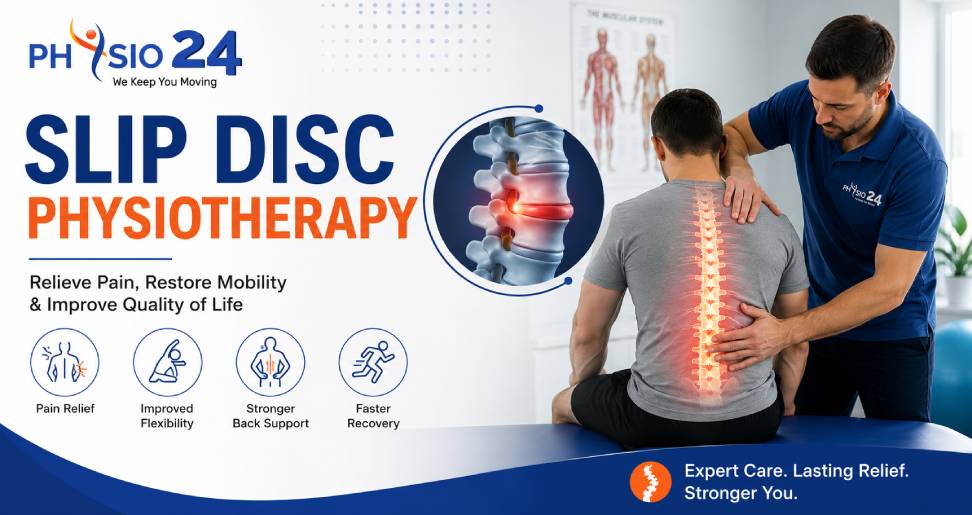
A slip disc, more accurately called a herniated or prolapsed disc, occurs when the soft inner material of a spinal disc pushes through a weakened or damaged outer layer. When the affected disc irritates or presses on a nearby nerve, it can cause lower back pain, stiffness, tingling, numbness or pain that travels into the leg. However, not everyone with a herniated disc experiences symptoms.
For many people, symptoms improve with conservative care rather than surgery. Slip disc physiotherapy can play an important role by helping reduce pain, restore movement, improve strength and gradually return the person to normal daily activities.
What Causes a Slip Disc?
Spinal discs act as cushions between the vertebrae. Over time, age-related changes can make these discs less flexible and more vulnerable to injury. A disc problem may also develop following repeated bending, awkward twisting, poor lifting techniques or excessive strain on the back.
Long periods of sitting, physical work involving repetitive lifting and certain lifestyle factors can also contribute to back problems. However, a slip disc does not always result from one specific accident or movement.
Common Symptoms of a Slip Disc
Symptoms depend on the location of the affected disc and whether a nerve is irritated. Common symptoms include:
- Lower back or neck pain
- Pain spreading into the buttock, hip or leg
- Tingling or pins-and-needles sensations
- Numbness
- Muscle weakness
- Difficulty bending, standing or walking comfortably
- Sciatica when a lumbar nerve is affected
Some people have a herniated disc without experiencing any symptoms at all.
How Can Physiotherapy Help With a Slip Disc?
Physiotherapy is generally focused on managing symptoms while gradually improving movement and physical capacity. A physiotherapist first evaluates your pain, mobility, muscle strength, posture and neurological symptoms before developing an appropriate treatment programme.
Depending on the individual, treatment may include:
1. Gentle Therapeutic Exercises
Specific exercises can help improve spinal movement, strengthen the core and support the muscles around the spine. A physiotherapist may introduce gentle mobility exercises initially and progressively add strengthening and functional exercises as symptoms settle.
The goal is not simply to exercise more, but to choose movements appropriate for the individual’s symptoms and stage of recovery. Physical therapy may help reduce discomfort and make everyday movement easier.
2. Posture and Movement Education
Poor sitting habits, repeated bending and incorrect lifting techniques can place additional stress on the back. Physiotherapy can teach safer ways to sit, stand, bend, lift and perform daily activities.
Patients may also be advised to avoid movements that consistently aggravate their symptoms while maintaining appropriate levels of activity.
3. Manual Therapy
Hands-on techniques may sometimes be incorporated into a physiotherapy programme to improve movement and reduce discomfort. The choice of technique depends on the individual’s assessment and should not replace active rehabilitation.
4. Core and Muscle Strengthening
Weakness or reduced activity following an episode of back pain can affect physical function. Progressive strengthening exercises can help develop the trunk and surrounding muscles, supporting better movement and improving confidence with everyday activities.
5. Gradual Return to Normal Activity
Extended bed rest is generally not recommended for uncomplicated herniated-disc symptoms. Remaining appropriately active and gradually returning to normal movement can support recovery, while painful or aggravating activities should be modified.
Chiropractic, Osteopathic Manipulation, Dry Needling and Physiotherapy
People with back pain may come across several treatment approaches, including Chiropractic, Osteopathic Manipulation, Dry Needling and Physiotherapy. These approaches are not identical and should not automatically be considered interchangeable.
Chiropractic: Chiropractic care may include spinal manipulation and other approaches aimed at improving movement and managing musculoskeletal pain. Some people may experience relief from certain forms of chiropractic care, but treatment should be appropriately assessed, particularly when neurological symptoms are present.
Osteopathic Manipulation: Osteopathic practitioners may use hands-on techniques to address musculoskeletal movement and function. Suitability depends on the individual’s condition, symptoms and clinical assessment.
Dry Needling: Dry needling uses fine needles to target selected muscles or soft tissues, often with the aim of reducing muscular tension or pain. It may be considered as part of a broader rehabilitation programme when clinically appropriate.
Physiotherapy: Physiotherapy generally takes a broader rehabilitation approach, combining assessment, education, exercise, movement retraining and, where appropriate, manual techniques. For slip disc symptoms, a personalised physiotherapy programme can focus on restoring mobility, strength and functional ability.
The most suitable approach depends on the diagnosis, symptoms, medical history and presence of nerve-related signs. A qualified healthcare professional should assess persistent or significant symptoms before treatment begins.
Is Surgery Always Necessary?
No. Most people with herniated discs improve without surgery. Conservative treatment may include activity modification, medication when appropriate, physiotherapy and other medical treatments.
Surgery may be considered when symptoms remain severe despite appropriate non-surgical treatment, or when there is significant or progressive neurological impairment. Loss of bladder or bowel control, numbness around the groin or saddle area, or rapidly worsening weakness requires urgent medical assessment.
When Should You See a Physiotherapist?
Consider professional assessment if back pain is affecting your ability to work, exercise, sleep or perform everyday activities. A physiotherapist can assess your movement and help determine which exercises and activities are appropriate.
If pain travels down the leg, or you experience numbness, tingling or weakness, a proper clinical assessment becomes especially important.
For people looking for professional support with musculoskeletal problems, Physio 24*7 can be considered as an option for physiotherapy care and guidance.
Tips for Supporting Slip Disc Recovery
Alongside professional treatment, several habits may support recovery:
- Avoid prolonged bed rest unless specifically advised by a healthcare professional.
- Keep moving within comfortable limits.
- Increase activity gradually rather than suddenly.
- Use correct lifting techniques.
- Take regular movement breaks if you sit for long periods.
- Follow your prescribed exercise programme consistently.
- Avoid exercises that significantly increase your symptoms.
- Maintain healthy body weight and regular physical activity where appropriate.
Recovery varies between individuals. Some people improve within weeks, while others may require a longer rehabilitation period.
Conclusion
Slip disc physiotherapy can be an important part of non-surgical recovery for many people. Through personalised exercises, strengthening, movement education and appropriate hands-on treatment, physiotherapy can help manage symptoms and improve everyday function.
Chiropractic, Osteopathic Manipulation and Dry Needling may also be considered in selected circumstances, but treatment should always be based on an individual’s symptoms and professional assessment. If you experience severe or worsening weakness, significant numbness or bladder and bowel changes, seek urgent medical attention rather than relying solely on physical therapy.
With the right assessment, appropriate activity and a structured rehabilitation programme, many people with a slip disc can gradually return to normal movement and daily life.


Leave a Reply
You must belogged in to post a comment.