


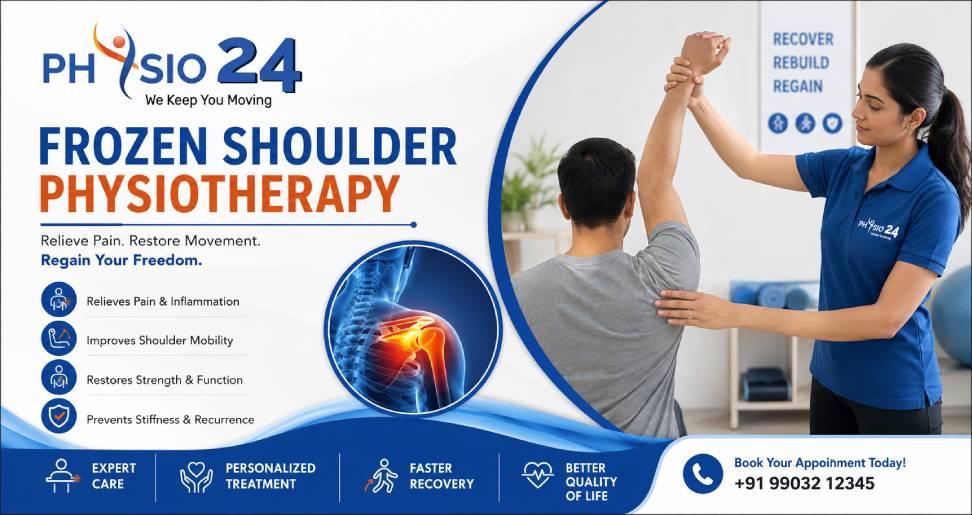
Frozen shoulder, medically known as adhesive capsulitis, is a condition that causes persistent shoulder pain, stiffness and restricted movement. Simple activities such as reaching overhead, dressing, combing your hair or putting your hand behind your back can become difficult. The condition may develop gradually and can last for several months or, in some cases, years.
Frozen shoulder physiotherapy can play an important role in managing symptoms and gradually restoring shoulder movement. A personalised rehabilitation programme can help you remain active while avoiding exercises or movements that unnecessarily increase pain.
What Is a Frozen Shoulder?
Frozen shoulder occurs when the tissues surrounding the shoulder joint become inflamed and the joint capsule gradually tightens. As a result, the shoulder becomes painful and increasingly difficult to move.
The condition commonly develops through different stages. Initially, pain may be the dominant symptom, often becoming worse at night. As the condition progresses, stiffness can become more noticeable and everyday movements may become restricted. Eventually, movement and function generally begin to improve, although recovery can be slow.
Because other shoulder conditions can cause similar symptoms, a proper assessment is important before starting an exercise programme.
Common Symptoms of Frozen Shoulder
The most common symptoms include:
- Persistent shoulder pain
- Increasing stiffness
- Difficulty raising the arm
- Difficulty reaching behind the back
- Problems with dressing or personal care
- Difficulty reaching high shelves
- Night-time discomfort that may interfere with sleep
- Reduced shoulder strength and function
The combination of pain and restricted movement can affect both work and daily activities.
How Can Physiotherapy Help Frozen Shoulder?
Physiotherapy focuses on reducing discomfort, maintaining mobility and gradually improving the function of the shoulder. Treatment should be adapted to the person’s symptoms, stage of the condition and movement limitations.
During an assessment, a physiotherapist may evaluate your shoulder range of motion, strength, posture and functional limitations. Based on these findings, they can create an individual rehabilitation plan.
A physiotherapy programme may include:
1. Gentle Stretching
Gentle stretching can help maintain and gradually improve shoulder movement. The exercises should generally produce a manageable stretching sensation rather than sharp or increasing pain.
Common movements may include assisted shoulder elevation, external rotation and gentle behind-the-back stretches.
2. Range-of-Motion Exercises
Maintaining comfortable shoulder movement is important because completely avoiding movement may contribute to increased stiffness. Exercises can be progressed gradually as pain and mobility change.
Examples include pendulum movements, wall slides and assisted shoulder movements.
3. Strengthening Exercises
As movement improves and pain becomes more manageable, strengthening exercises may be introduced. Strengthening the muscles around the shoulder can help improve stability and functional ability.
The timing and intensity of strengthening should be determined according to the individual’s condition rather than following a generic programme.
4. Manual Therapy
Depending on the person’s symptoms and assessment, a physiotherapist may use hands-on techniques alongside exercise. Physiotherapy can also include education about posture, activity modification and ways of managing symptoms.
5. Home Exercise Programme
Consistency is an important part of rehabilitation. A physiotherapist may provide exercises to perform between appointments so that mobility work can continue at home.
However, more exercise is not always better. NHS guidance recommends avoiding strenuous, self-prescribed exercises that aggravate shoulder pain.
Useful Exercises for Frozen Shoulder
Depending on your stage of recovery, a physiotherapist may recommend gentle exercises such as:
Pendulum exercise: Lean forward while supporting yourself with your unaffected arm and allow the affected arm to hang comfortably. Make small, relaxed movements.
Assisted external rotation: Hold a stick or similar object with both hands and gently use the unaffected arm to assist outward rotation of the affected shoulder.
Shoulder flexion: Use a table or other stable surface to support the arms and gently move the body backwards to create a comfortable stretch.
Shoulder rolls: Slowly roll your shoulders backwards and forwards without forcing the movement.
These exercises should be performed according to professional guidance. If an exercise causes increasing or persistent pain, stop and seek advice from a physiotherapist or doctor.
How Long Does Frozen Shoulder Take to Recover?
Recovery varies considerably from person to person. Frozen shoulder can improve naturally over time, but the process may take months or even several years. The NHS notes that pain and stiffness can persist for months or years, while the AAOS states that full recovery may take up to three years in some cases.
Patience and appropriate activity are therefore important. Treatment should focus on gradual improvement rather than trying to force the shoulder to recover quickly.
Why Choose Physio 24 for Frozen Shoulder Physiotherapy?
If shoulder stiffness or pain is affecting your everyday life, professional physiotherapy can help you understand the problem and develop an appropriate rehabilitation approach.
Physio 24 provides physiotherapy services designed around individual needs. Instead of relying on a one-size-fits-all exercise routine, a qualified physiotherapist can assess your symptoms, identify movement limitations and guide you through appropriate exercises and rehabilitation.
Whether your goal is to improve shoulder mobility, return to normal daily activities or manage persistent discomfort, a structured frozen shoulder physiotherapy programme can provide guidance throughout your recovery.
When Should You Seek Professional Help?
You should consider seeking medical or physiotherapy advice if shoulder pain and stiffness persist, worsen or make it difficult to move your arm. Shoulder pain can have several causes, so self-diagnosis is not recommended.
A professional assessment can help determine whether your symptoms are consistent with frozen shoulder or another shoulder condition and whether physiotherapy is appropriate.
Conclusion
Frozen shoulder can make everyday movements uncomfortable and frustrating, but appropriate management can help improve function over time. Frozen shoulder physiotherapy may involve gentle stretching, mobility exercises, strengthening, hands-on treatment, education and a personalised home exercise programme.
The key is to progress gradually and avoid forcing painful movements. If you are experiencing persistent shoulder pain or stiffness, consider speaking with a qualified physiotherapist.
For personalised assessment and rehabilitation support, Physio 24 can help you take a structured approach towards improving shoulder mobility and returning to everyday activities.


Leave a Reply
You must belogged in to post a comment.