


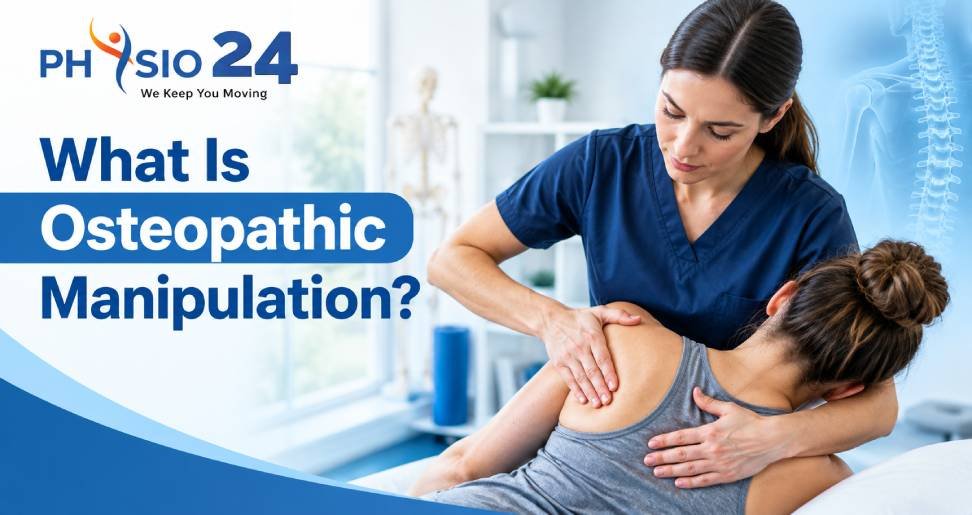
Osteopathic manipulation is a hands-on approach used to assess and manage problems involving the muscles, joints, connective tissues, and movement of the body. It uses carefully applied manual techniques to improve mobility, reduce discomfort, and support the body’s natural ability to function efficiently.
People experiencing back pain, neck stiffness, joint restrictions, muscle tension, or movement difficulties may benefit from an appropriately selected manual therapy approach. At Physio 24, osteopathic manipulation can be considered as part of an individualized physiotherapy and rehabilitation plan, depending on a person’s condition, goals, and clinical assessment.
Understanding what osteopathic manipulation involves—and how it differs from other hands-on approaches such as chiropractic care—can help people make more informed decisions about musculoskeletal treatment.
What Does Osteopathic Manipulation Mean?
Osteopathic manipulation refers to hands-on techniques designed to evaluate and influence the body’s musculoskeletal structures. A practitioner may use controlled movements, stretching, pressure, mobilization, or other manual techniques depending on the individual’s needs.
The underlying concept is that the body’s muscles, joints, connective tissues, and movement patterns work together. When movement becomes restricted or certain tissues become overloaded, it can affect everyday activities and contribute to discomfort.
Treatment is therefore generally tailored to the individual rather than based solely on the location of symptoms.
For example, someone with lower back discomfort may have contributing factors involving hip mobility, muscle tension, posture, or movement habits. A practitioner may assess these areas before deciding which treatment techniques are appropriate.
How Does Osteopathic Manipulation Work?
During an assessment, a qualified practitioner typically considers movement, flexibility, strength, joint function, and the person’s symptoms. Based on these findings, appropriate manual techniques may be incorporated into the treatment plan.
These techniques can include:
- Gentle joint mobilization
- Soft-tissue techniques
- Stretching
- Controlled joint movements
- Muscle and connective-tissue techniques
- Movement-based manual therapy
The objective is not simply to manipulate a particular joint. Instead, treatment may form part of a broader strategy that combines hands-on care with therapeutic exercise, education, posture advice, and functional rehabilitation.
The exact techniques used should depend on the individual’s health status and clinical requirements.
What Conditions May Be Addressed?
Osteopathic manipulation and other forms of manual therapy may be used as part of care for a range of musculoskeletal problems. Depending on the assessment, these approaches may be considered for:
- Back and neck discomfort
- Joint stiffness
- Muscle tightness
- Reduced range of movement
- Certain sports-related musculoskeletal problems
- Movement-related pain
- Postural and mobility concerns
- Some rehabilitation programs
However, manual therapy is not appropriate for every condition or every person. A proper assessment is important before treatment begins.
At Physio 24, the focus is on understanding the individual’s symptoms and functional limitations before developing a suitable rehabilitation approach.
Osteopathic Manipulation vs. Chiropractic
Osteopathic manipulation and Chiropractic are both associated with hands-on approaches to musculoskeletal care, but they are not identical.
Chiropractic care traditionally places significant emphasis on the relationship between the spine, joints, nervous system, and musculoskeletal function. Chiropractors may use spinal or joint manipulation alongside other approaches.
Osteopathic manipulation, meanwhile, is a broader term describing manual techniques used within osteopathic practice. Depending on the practitioner and healthcare system, osteopathic approaches can include assessment and treatment of muscles, joints, fascia, and other body structures.
There can be considerable overlap between different manual therapy professions. The techniques and scope of practice can also vary by practitioner, training, and country.
For someone considering treatment, the most important factors include appropriate assessment, professional qualifications, communication, and an individualized treatment plan.
Osteopathic Manipulation and Physiotherapy
Osteopathic manipulation does not necessarily need to be viewed as an alternative to Physiotherapy. Manual techniques can be incorporated into a wider physiotherapy rehabilitation program when clinically appropriate.
Physiotherapy can address several aspects of recovery, including:
- Mobility
- Muscle strength
- Balance
- Flexibility
- Coordination
- Functional movement
- Exercise capacity
- Injury prevention
For example, a person recovering from a musculoskeletal injury may receive hands-on treatment to help address mobility restrictions while also performing targeted exercises to rebuild strength and movement control.
This combination can make rehabilitation more functional because the individual learns how to actively participate in their recovery rather than relying exclusively on passive treatment.
How Is Dry Needling Different?
Dry Needling is another treatment approach that may be used by appropriately trained healthcare professionals for selected musculoskeletal problems.
Unlike osteopathic manipulation, which primarily involves hands-on manual techniques, dry needling uses very fine needles inserted into specific tissues. It is commonly discussed in relation to muscular pain and trigger points, although its appropriate applications depend on clinical assessment and practitioner training.
Dry needling and manual therapy may sometimes be included within the same rehabilitation program. However, they are different techniques and should not be treated as interchangeable.
A qualified professional can determine whether either approach is appropriate based on the individual’s symptoms, medical history, examination findings, and treatment objectives.
What Happens During an Osteopathic Manipulation Session?
A session generally begins with an assessment. The practitioner may ask about symptoms, previous injuries, daily activities, and relevant medical history.
Movement and physical function may then be examined. Depending on the findings, the practitioner may use selected manual techniques.
A session may involve:
1. Assessment: Understanding symptoms and identifying movement or functional limitations.
2. Treatment planning: Selecting techniques that are appropriate for the individual’s condition.
3. Manual therapy: Applying controlled hands-on techniques where indicated.
4. Exercise or movement advice: Introducing exercises or activities that support recovery.
5. Progress review: Monitoring changes and adjusting the rehabilitation plan when necessary.
This individualized approach helps ensure that treatment addresses more than just a person’s immediate symptoms.
Is Osteopathic Manipulation Suitable for Everyone?
No single treatment is suitable for everyone. Certain medical conditions, recent injuries, fractures, infections, severe neurological symptoms, or other circumstances may require different management or medical assessment.
People should provide their practitioner with relevant information about existing conditions, medications, previous injuries, surgeries, and current symptoms.
If symptoms include serious or unexplained signs—such as significant weakness, loss of sensation, severe trauma, or other concerning changes—medical evaluation may be more appropriate than simply seeking manual therapy.
Choosing the Right Rehabilitation Approach
The goal of musculoskeletal rehabilitation should be to improve function while addressing the factors contributing to a person’s problem.
At Physio 24, treatment can be tailored around the individual’s presentation rather than applying the same technique to everyone. Depending on clinical requirements, a rehabilitation program may incorporate physiotherapy, Chiropractic approaches, Osteopathic Manipulation, Dry Needling, therapeutic exercises, and other appropriate interventions.
The choice of treatment should always follow a professional assessment.
Why Choose Physio 24?
Finding an appropriate rehabilitation provider is an important step when dealing with persistent pain, restricted movement, or an injury. Physio 24 takes an individualized approach to musculoskeletal care, focusing on assessment, treatment, movement, and rehabilitation.
Rather than relying on one technique, an integrated approach can help address different aspects of physical function. Whether someone needs support following an injury or is experiencing ongoing movement limitations, the treatment plan can be adapted according to their specific requirements.
Final Thoughts
Osteopathic manipulation is a hands-on approach that can be used to address certain musculoskeletal and movement-related problems. It may involve joint mobilization, soft-tissue techniques, stretching, and other manual methods.
It is important to understand that manual therapy works best as part of an appropriate overall care plan when it is clinically indicated. Combining hands-on treatment with exercise, education, and active rehabilitation can provide a more comprehensive approach to improving movement and function.
If you are considering osteopathic manipulation, Physio 24 can help you understand your available physiotherapy and rehabilitation options through an individualized assessment and treatment approach.


Leave a Reply
You must belogged in to post a comment.