


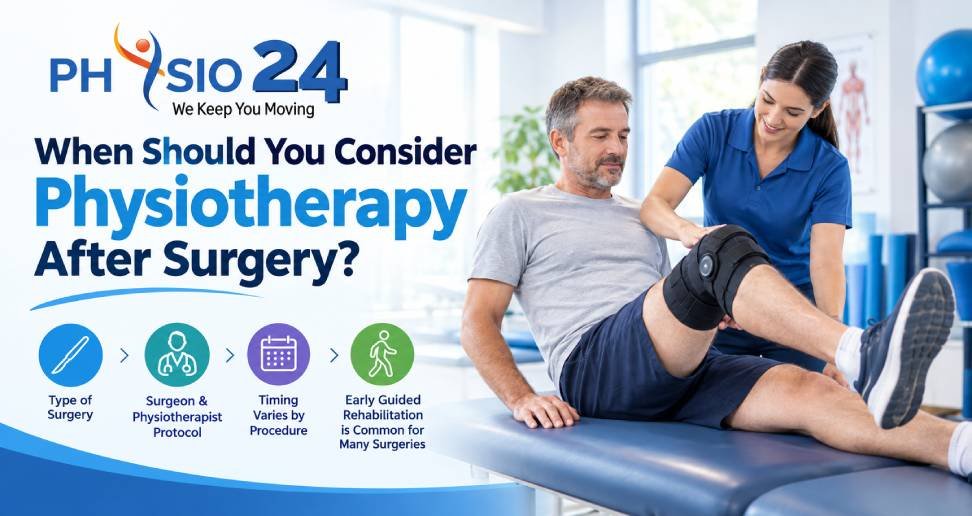
Surgery is often an important step toward treating an injury, medical condition, or movement problem, but the operation itself is only one part of the recovery process. After surgery, the body needs time, appropriate movement, and a structured rehabilitation plan to restore strength and function. This is where physiotherapy can become an important part of recovery.
So, when should you consider physiotherapy after surgery? The answer depends on the type of surgery, your overall health, the surgeon’s instructions, and your current mobility. For some procedures, physiotherapy begins while you are still in the hospital. For others, outpatient rehabilitation may start after the wound has sufficiently healed or when your surgeon recommends it.
Why Is Physiotherapy Important After Surgery?
Following surgery, it is common to experience weakness, stiffness, reduced mobility, swelling, pain, and difficulty performing everyday activities. Spending too much time inactive can also contribute to muscle weakness and reduced physical conditioning.
Physiotherapy provides a structured way to gradually restore movement and physical function. Depending on the procedure, a physiotherapist may work on mobility, flexibility, strength, balance, coordination, walking ability, and functional activities.
Early movement is often encouraged when medically appropriate. NHS guidance notes that getting out of bed and becoming active as soon as possible after surgery can support recovery, while hospitals may use rehabilitation programmes to help patients return to normal function.
When Should You Start Physiotherapy After Surgery?
There is no universal number of days or weeks that applies to every surgical patient. Your surgeon and rehabilitation team should determine when and how exercises should begin.
In some cases, physiotherapy starts within the hospital shortly after surgery. A physiotherapist may help you get out of bed, transfer safely to a chair, walk with appropriate support, perform breathing exercises, or learn movements that are safe for your particular procedure.
For other surgeries, formal outpatient physiotherapy may begin after discharge. The rehabilitation programme will usually follow a protocol developed around the type of operation and may be adjusted according to your individual progress.
Therefore, rather than waiting for pain to disappear completely, discuss rehabilitation with your surgeon or physiotherapist early in the recovery process.
Signs That You May Benefit From Physiotherapy
You may want to consider professional physiotherapy assessment if you experience:
- Persistent stiffness around the operated area
- Difficulty walking or moving normally
- Muscle weakness following a period of reduced activity
- Difficulty climbing stairs or performing everyday tasks
- Reduced flexibility or range of motion
- Problems with balance or coordination
- Ongoing difficulty returning to work or exercise
- Reduced confidence when using the affected body part
- Difficulty returning to sports or other physical activities
A physiotherapist can assess your current functional abilities and create a progressive rehabilitation programme rather than expecting you to resume normal activity immediately.
Physiotherapy Can Begin With Simple Movement
Post-surgical physiotherapy does not necessarily mean intensive exercise. In the early stages, treatment may involve relatively simple activities appropriate to your condition.
These can include gentle range-of-motion exercises, circulation exercises, breathing exercises, bed mobility, supported walking, transfers, and basic muscle activation. As recovery progresses, the programme can gradually include strengthening, balance work, functional training, and activity-specific exercises.
For example, hospital physiotherapy services may help patients begin sitting, transferring, walking, and using appropriate walking aids depending on their medical condition.
The objective is to progress safely rather than push through pain or healing restrictions.
What Happens During Post-Surgical Rehabilitation?
Your physiotherapist will typically consider several factors before designing your programme. These may include the type of surgery, surgical precautions, pain levels, swelling, strength, mobility, balance, previous activity levels, and your personal recovery goals.
Early rehabilitation may focus on protecting the surgical area while maintaining safe movement. Later stages can focus on rebuilding strength and restoring functional capacity.
For orthopaedic procedures, rehabilitation may be particularly important because joints, muscles, tendons, or ligaments can become weak or restricted after surgery. Structured rehabilitation protocols are commonly used following procedures such as joint replacements, ligament reconstruction, arthroscopy, and certain tendon repairs.
Physiotherapy After Knee or Orthopaedic Surgery
Knee, hip, shoulder, and other orthopaedic surgeries often require a progressive rehabilitation programme.
For example, following knee surgery, treatment may involve restoring knee movement, improving quadriceps strength, improving walking mechanics, and gradually returning to normal functional activities. The exact exercises and progression depend on the specific operation.
If you have undergone knee replacement surgery, a dedicated Knee Replacement Physiotherapy programme can help address movement, strength, walking, and functional limitations according to your recovery stage.
Similarly, patients recovering from ligament procedures may require structured rehabilitation before returning to demanding physical activities. Physio 24 provides ACL Reconstruction Rehabilitation alongside other rehabilitation services.
Can Manual Therapy Be Used After Surgery?
Depending on the procedure and healing stage, Manual Therapy may sometimes be incorporated into rehabilitation to address appropriate mobility or soft-tissue restrictions.
However, hands-on treatment should never replace the overall rehabilitation plan. The operated area must be protected according to the surgeon’s instructions, and the physiotherapist should determine which techniques are appropriate.
Physio 24 combines rehabilitation with treatment approaches selected according to individual clinical requirements. Its listed services include Manual Therapy, rehabilitation, Dry Needling, therapeutic tapping, and other physiotherapy services.
What About Chiropractic and Osteopathic Manipulation?
Patients sometimes ask whether Chiropractic or Osteopathic Manipulation can be used during recovery after surgery.
These approaches are different from conventional physiotherapy and should not automatically be used simply because someone has pain or stiffness. Following surgery, treatment must take into account the surgical site, healing stage, medical history, and restrictions provided by the surgical team.
When clinically appropriate, Chiropractic and Osteopathic Manipulation may be considered for certain musculoskeletal concerns. Physio 24 lists osteopathic and chiropractic adjustment among its treatment approaches.
The priority after surgery should remain safe healing and progressive restoration of function.
Can Dry Needling Help During Rehabilitation?
Dry Needling may be considered in selected situations when muscular tightness or myofascial symptoms contribute to a patient’s problems. It uses fine needles applied to selected tissues and is different from manual therapy.
It should not be treated as a replacement for active rehabilitation, particularly after surgery. Whether it is suitable depends on the procedure, healing stage, symptoms, and professional assessment.
Physio 24 offers Dry Needling with Electro Therapy as one of its listed treatment options, alongside physiotherapy and rehabilitation services.
Why Choose Physio 24 for Post-Surgical Rehabilitation?
Recovering from surgery requires more than simply waiting for the wound to heal. Restoring movement, strength, balance, and functional ability can be an important part of returning to everyday life.
Physio 24 provides Pre and Post Surgical Rehabilitation as part of its clinical services. The clinic also provides Physiotherapy, Manual Therapy, Dry Needling, Chiropractic and Osteopathic approaches, therapeutic tapping, laser therapy, neurological rehabilitation, and other rehabilitation services.
Its approach allows treatment to be adapted according to the patient’s condition, recovery stage, and functional goals.
When Should You Contact a Professional?
If you are unsure about when to begin physiotherapy after surgery, speak with your surgeon or a qualified physiotherapist. Do not start exercises that conflict with your post-operative restrictions.
You should also seek medical advice if you develop symptoms that are unexpected or worsening, such as significant swelling, increasing pain, wound problems, new weakness, loss of sensation, breathing difficulties, or other concerning symptoms.
Your rehabilitation programme should progress gradually. Some people recover quickly, while others require more time depending on the procedure and their overall health.
Conclusion
So, when should you consider physiotherapy after surgery? In many cases, rehabilitation can begin very early, sometimes while you are still in hospital. However, the exact timing and type of treatment depend on your surgery, healing progress, medical condition, and surgeon’s recommendations.
Physiotherapy can help you gradually restore movement, strength, balance, independence, and confidence. Treatments such as Manual Therapy, Chiropractic, Osteopathic Manipulation, and Dry Needling may have a role for selected patients, but they should complement an appropriately planned rehabilitation programme rather than replace it.
If you are recovering from surgery in Kolkata and need professional rehabilitation support, Physio 24 offers post-surgical physiotherapy and a range of rehabilitation services designed around individual patient needs.


Leave a Reply
You must belogged in to post a comment.