


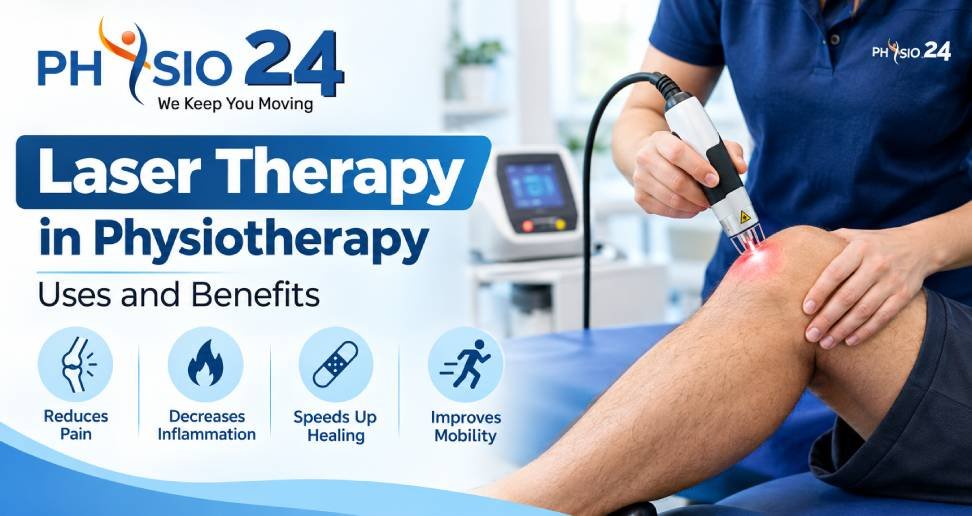
Laser therapy is becoming an increasingly popular treatment option in modern physiotherapy because of its potential to help manage pain, support tissue healing, and improve movement. From sports injuries and muscle strains to persistent joint discomfort, laser therapy may be used as part of a personalised rehabilitation programme to support recovery.
For people experiencing pain or restricted mobility, understanding how laser therapy works and when it may be beneficial can help them make informed decisions about their treatment. At Physio 24×7, patients can explore individualised physiotherapy and complementary manual therapy options designed around their symptoms, mobility, and recovery goals.
What Is Laser Therapy in Physiotherapy?
Laser therapy is a non-invasive treatment that uses specific wavelengths of light to interact with tissues in the body. In physiotherapy, it is commonly associated with low-level laser therapy (LLLT), also known as photobiomodulation therapy. Depending on the equipment and clinical purpose, other therapeutic laser systems may also be used.
Unlike surgical lasers, low-level therapeutic lasers are generally designed to deliver light without cutting or significantly heating the tissue. The treatment aims to influence cellular processes that may contribute to pain relief, inflammation management, and tissue repair.
A physiotherapist may consider laser therapy alongside exercises, movement training, and other rehabilitation techniques. Its suitability depends on the patient’s condition, medical history, treatment goals, and the available scientific evidence for the specific problem.
How Does Laser Therapy Work?
Laser therapy delivers light energy to the targeted area. Certain wavelengths can be absorbed by components within cells, potentially influencing cellular energy production and signalling pathways involved in tissue responses.
Researchers have investigated whether these effects can help regulate inflammation, influence pain signalling, and support the body’s natural healing processes. However, results vary according to the condition being treated, the laser’s wavelength, the dosage, and the treatment protocol.
Laser therapy is not an instant cure for every painful condition. It is best considered one possible component of a broader rehabilitation plan rather than a replacement for appropriate medical assessment or active treatment.
Common Uses of Laser Therapy in Physiotherapy
Laser therapy may be considered for several musculoskeletal conditions, depending on the clinical assessment.
1. Muscle Strains and Soft Tissue Injuries
Muscle strains, ligament injuries, and other soft tissue problems can cause discomfort, swelling, and difficulty performing everyday activities. Laser therapy may be used alongside graded exercises and other physiotherapy interventions to support symptom management.
Rehabilitation typically focuses on restoring strength, flexibility, coordination, and confidence in movement while allowing the injured tissues to recover.
2. Joint Pain and Stiffness
People experiencing knee, shoulder, elbow, or other joint pain may be assessed for laser therapy as part of their treatment plan. Some evidence suggests that specific laser protocols may help reduce pain in selected conditions, including certain cases of osteoarthritis.
However, outcomes are not consistent across all joint conditions. Exercise, appropriate activity modification, and strengthening remain important parts of effective joint rehabilitation.
3. Tendon-Related Problems
Tendon conditions, including some cases of tendinopathy, can lead to persistent pain during movement or exercise. Laser therapy may be considered as an additional intervention where clinically appropriate.
A comprehensive programme should also address tendon loading, progressive strengthening, activity levels, and contributing movement patterns. Laser treatment alone is unlikely to resolve every underlying cause of tendon pain.
4. Sports Injuries and Recovery
Athletes and physically active individuals may experience muscle soreness, tendon irritation, and other sports-related injuries. Laser therapy may be incorporated into a rehabilitation programme to help manage symptoms and support a gradual return to activity.
The treatment plan should prioritise restoring functional strength, balance, coordination, and sport-specific movement before returning to full training or competition.
5. Neck and Back Pain
Neck and back pain can arise from several factors, including muscle tension, joint problems, reduced mobility, and changes in activity tolerance. In selected cases, laser therapy may be considered to help manage symptoms.
A thorough assessment is essential because persistent or severe spinal pain may require further medical investigation. Education, therapeutic exercise, and appropriate movement strategies are often central to long-term improvement.
Key Benefits of Laser Therapy
When used appropriately, laser therapy may offer several potential benefits:
- Non-invasive treatment: It does not involve surgical incisions and is generally painless when delivered using suitable low-level laser protocols.
- Potential pain relief: Some patients may experience a reduction in pain, depending on the condition and treatment parameters.
- Support for tissue recovery: Photobiomodulation may influence cellular processes associated with tissue repair, although clinical benefits vary.
- Convenient treatment sessions: Low-level laser applications are often relatively brief, making them possible to incorporate into a wider physiotherapy appointment.
- Combination with rehabilitation: It can be used alongside exercise, manual therapy, and movement retraining when appropriate.
- Individualised care: A physiotherapist can assess whether laser therapy is suitable and monitor changes in pain, mobility, and daily function.
It is important to understand that these are potential benefits, not guaranteed outcomes. Scientific evidence differs between conditions, and some patients may experience little or no improvement.
Laser Therapy Alongside Other Physiotherapy Treatments
Successful rehabilitation often involves more than one treatment technique. At Physio 24×7, a comprehensive approach can include physiotherapy and other clinically appropriate interventions to address pain, movement restrictions, and functional difficulties.
Physiotherapy
Physiotherapy focuses on improving movement, strength, flexibility, balance, and physical function. Depending on the patient’s needs, treatment may include therapeutic exercises, mobility training, education, and suitable pain-management strategies. Laser therapy, when indicated, may complement these interventions.
Chiropractic
Chiropractic care may involve hands-on techniques directed at selected musculoskeletal complaints. A qualified practitioner can assess whether appropriate manual techniques may complement an individual’s rehabilitation programme. Treatment should be based on the person’s symptoms, medical history, and clinical suitability.
Osteopathic Manipulation
Osteopathic Manipulation involves manual techniques intended to address selected movement restrictions and musculoskeletal symptoms. When appropriate, it may be integrated into a wider care plan that also includes exercise, education, and functional rehabilitation.
Dry Needling
Dry Needling is a technique in which a trained practitioner inserts fine needles into selected muscle or other targeted tissues to address particular musculoskeletal symptoms. It may be considered for certain cases of muscle pain or movement restriction following a suitable assessment.
These approaches are not interchangeable, and no single technique is appropriate for everyone. A personalised treatment plan should prioritise interventions supported by evidence for the patient’s specific condition.
Note: The links above are placeholders for service-page linking. Replace them with the exact Physiotherapy, Chiropractic, Osteopathic Manipulation, and Dry Needling URLs on the official Physio 24×7 website before publishing.
Is Laser Therapy Safe?
Low-level laser therapy is generally well tolerated when administered by a trained professional using appropriate equipment and safety procedures. Nevertheless, precautions are essential.
Protective eyewear should be used as required, and the laser must never be directed into the eyes. Treatment also requires careful consideration around areas or circumstances where laser exposure may be inappropriate, including suspected malignancies in the treatment area and certain pregnancy-related situations.
Patients should disclose relevant medical conditions, medications, pregnancy, and any unexplained symptoms before treatment. High-intensity therapeutic lasers have different risks from low-level devices, so the type of equipment matters.
A qualified healthcare professional can determine whether laser therapy is appropriate and whether further medical assessment is needed.
What to Expect During a Laser Therapy Session
Treatment generally begins with an assessment of symptoms, medical history, movement, and functional limitations. The practitioner then determines whether laser therapy is suitable and selects the relevant treatment parameters.
During the session, the device is applied to the targeted area according to the prescribed protocol. Patients may feel little or no sensation during low-level laser treatment. The practitioner may then recommend exercises, mobility work, or other rehabilitation techniques.
Progress should be reviewed over time. If symptoms worsen, new symptoms develop, or the expected improvement does not occur, the treatment plan should be reassessed.
Why Choose Physio 24×7 for Your Rehabilitation Needs?
Choosing the right physiotherapy provider can make it easier to understand your condition and work towards meaningful recovery goals. Physio 24×7 promotes a patient-focused approach that considers symptoms, movement, daily activities, and individual rehabilitation needs.
Whether you are dealing with joint discomfort, a sports injury, muscle tightness, or restricted mobility, a professional assessment can help identify suitable treatment options. Depending on your condition, your care plan may include Physiotherapy, Chiropractic, Osteopathic Manipulation, Dry Needling, and other appropriate interventions.
The goal is not simply to reduce discomfort temporarily but to help you improve function, build physical confidence, and return to activities that matter to you.
Conclusion
Laser therapy is a promising treatment option within modern physiotherapy, particularly when considered for selected musculoskeletal conditions. It may help manage pain and support recovery, but its effectiveness depends on the diagnosis, treatment protocol, and individual response.
Combining appropriate treatment with exercise, education, and a personalised rehabilitation plan can provide a more comprehensive approach to recovery. If pain or restricted movement is affecting your daily life, consult Physio 24×7 to discuss your symptoms and explore suitable physiotherapy options.


Leave a Reply
You must belogged in to post a comment.