Neurological Physiotherapy in Kolkata: A Complete Guide to Better Movement and Recovery
Neurological conditions can affect much more than movement. They may influence balance, coordination, muscle strength, walking ability, posture, speech-related functions, independence, and the ability to perform everyday activities. Conditions such as stroke, Parkinson’s disease, cerebral palsy, multiple sclerosis, spinal cord injuries, and peripheral nerve disorders may require long-term rehabilitation and professional support.
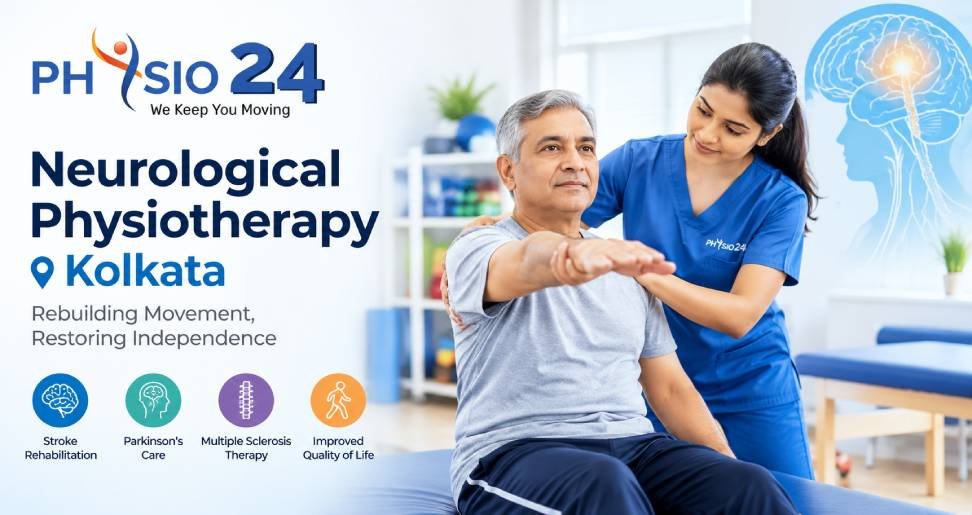
For people searching for neurological physiotherapy in Kolkata, a personalised rehabilitation programme can play an important role in improving physical function and supporting greater independence. Rather than following the same treatment for every patient, neurological physiotherapy focuses on the individual’s symptoms, abilities, goals, and stage of recovery.
What Is Neurological Physiotherapy?
Neurological physiotherapy is a specialised area of physiotherapy designed for people whose movement or physical function has been affected by a neurological condition or injury.
The nervous system controls how the body moves, maintains balance, coordinates activities, and responds to the environment. When neurological problems interfere with these functions, physiotherapy can help patients practise appropriate movements, build strength, improve balance, and develop strategies for performing daily activities more effectively.
Treatment may include therapeutic exercises, balance training, gait rehabilitation, mobility exercises, functional training, posture correction, manual techniques, and patient education.
Physio 24 provides Neurological Rehabilitation for adults and children and focuses on evidence-based physiotherapy and rehabilitation approaches. Its services include specialised care for conditions such as stroke, Parkinson’s disease and cerebral palsy.
Who Can Benefit From Neurological Physiotherapy?
Neurological physiotherapy may be useful for people experiencing movement or functional difficulties related to a variety of neurological conditions.
Common examples include:
- Stroke and hemiplegia
- Parkinson’s disease
- Cerebral palsy
- Multiple sclerosis
- Spinal cord injuries
- Peripheral neuropathy
- Balance and coordination difficulties
- Muscle weakness following neurological injury
- Difficulties with walking or transfers
Every neurological condition is different. Even two people with the same diagnosis can have very different symptoms and rehabilitation goals. That is why assessment should be the starting point for an appropriate treatment plan.
How Can Neurological Physiotherapy Help?
The main objective is not simply to reduce symptoms but to help a person achieve the greatest possible level of safe and functional movement.
1. Improving Strength and Mobility
Neurological conditions can lead to weakness or reduced physical activity. Carefully selected exercises can help maintain or improve muscle strength, joint mobility, flexibility, and physical endurance.
A physiotherapist can gradually progress exercises according to the individual’s ability and response.
2. Improving Balance and Coordination
Balance problems can increase the risk of falls and make everyday activities more difficult. Physiotherapy can incorporate balance exercises, weight-shifting activities, coordination exercises, and functional movement practice where appropriate.
The aim is to help patients become more confident and safer during movement.
3. Gait and Walking Rehabilitation
Walking difficulties are common following stroke and in several neurological conditions. Gait rehabilitation may involve practising stepping, weight transfer, walking patterns, lower-limb control, and the use of appropriate mobility aids.
The programme can be adjusted as the patient’s walking ability changes.
4. Functional Rehabilitation
Neurological physiotherapy is closely connected with everyday life. Patients may work on practical activities such as standing from a chair, transferring between surfaces, climbing steps, reaching, walking, or completing household activities.
The goal is to make improvements meaningful rather than focusing only on isolated exercises.
Stroke Rehabilitation Through Physiotherapy
A stroke can affect one side of the body, balance, coordination, walking, strength, and overall independence. Rehabilitation often requires consistent practice and a structured approach.
Physiotherapy for Stroke Patients may focus on improving movement control, strength, balance, walking ability, transfers, and functional independence. The specific programme depends on the patient’s condition and recovery stage.
Physio 24 lists Physiotherapy for Stroke Patients as one of its rehabilitation services and has a clinical focus on neurological rehabilitation.
Physiotherapy for Parkinson’s Disease
Parkinson’s disease can affect movement, posture, balance, coordination, walking, and functional independence. Physiotherapy may help patients maintain physical activity and practise movement strategies appropriate to their abilities.
Physiotherapy for Parkinson’s Disease can incorporate mobility exercises, strengthening, balance activities, posture-related exercises, walking practice, and functional rehabilitation.
The objective is to support safe movement and help patients remain as active and independent as possible.
Physiotherapy for Cerebral Palsy
Cerebral palsy can affect muscle tone, posture, coordination, balance, and movement. Rehabilitation needs can vary considerably between children and adults.
Physiotherapy for Cerebral Palsy may focus on maintaining mobility, improving functional movement, strengthening appropriate muscle groups, supporting posture, and developing age-appropriate physical skills.
Early and ongoing rehabilitation can be particularly valuable when treatment goals are tailored to the individual’s functional needs.
Chiropractic, Osteopathic Manipulation, Dry Needling and Physiotherapy
People looking for rehabilitation services may come across different approaches, including Chiropractic, Osteopathic Manipulation, Dry Needling and Physiotherapy. These approaches are different and should not automatically be treated as interchangeable.
Chiropractic may involve specific manual techniques intended to address musculoskeletal movement and function.
Osteopathic Manipulation uses hands-on techniques that may be directed toward musculoskeletal mobility and function when clinically appropriate.
Dry Needling uses fine needles to target selected muscles or soft tissues and may sometimes be used as an adjunct for muscular tension or pain. It should only be performed when appropriate and by a suitably trained professional.
Physiotherapy provides a broader rehabilitation framework that can include assessment, therapeutic exercise, movement retraining, education, functional rehabilitation, manual therapy, and other appropriate interventions.
Physio 24 specifically lists Osteopathic and Chiropractic Adjustment and Dry Needling among its clinical services, alongside neurological rehabilitation and physiotherapy.
Why Choose Physio 24 for Neurological Physiotherapy in Kolkata?
Choosing a rehabilitation provider is an important decision, particularly when neurological problems affect mobility and independence.
Physio 24 is based in Kolkata and provides physiotherapy and rehabilitation services under the clinical leadership of Dr. Vikash Kumar Tarway, whose listed areas include neurological rehabilitation. The clinic also offers clinical services and home care.
Its broader services include Manual Therapy, Dry Needling with Electro Therapy, Therapeutic Tapping, Physiotherapy for Stroke Patients, Physiotherapy for Parkinson’s Disease, and Physiotherapy for Cerebral Palsy.
This combination can make rehabilitation more personalised, because treatment can be selected according to the patient’s condition, functional goals, and clinical assessment rather than relying on a single technique.
What to Expect During a Neurological Physiotherapy Assessment
An initial assessment generally looks at movement, strength, balance, coordination, posture, walking ability, functional limitations, and the patient’s individual goals.
The physiotherapist may also consider medical history and current symptoms before developing an appropriate rehabilitation programme.
Based on the assessment, treatment may include:
- Therapeutic exercises
- Strength and mobility training
- Balance and coordination exercises
- Gait and walking rehabilitation
- Functional movement training
- Postural education
- Manual therapy where appropriate
- Dry Needling where clinically suitable
- Home exercise guidance
- Caregiver education
Progress can then be monitored and the programme modified as the patient’s abilities change.
Take the First Step Towards Better Movement
Living with a neurological condition can be challenging, but appropriate rehabilitation can help people work toward greater mobility, confidence, and independence. The right physiotherapy programme should be personalised, progressive, and based on professional assessment.
If you are searching for neurological physiotherapy in Kolkata, Physio 24 offers neurological rehabilitation alongside services such as stroke physiotherapy, Parkinson’s physiotherapy, cerebral palsy physiotherapy, manual therapy, Chiropractic, Osteopathic Manipulation, Dry Needling, and other rehabilitation approaches.
With consistent rehabilitation, professional guidance, and realistic goals, patients and their families can take meaningful steps toward improving everyday physical function and quality of life.